
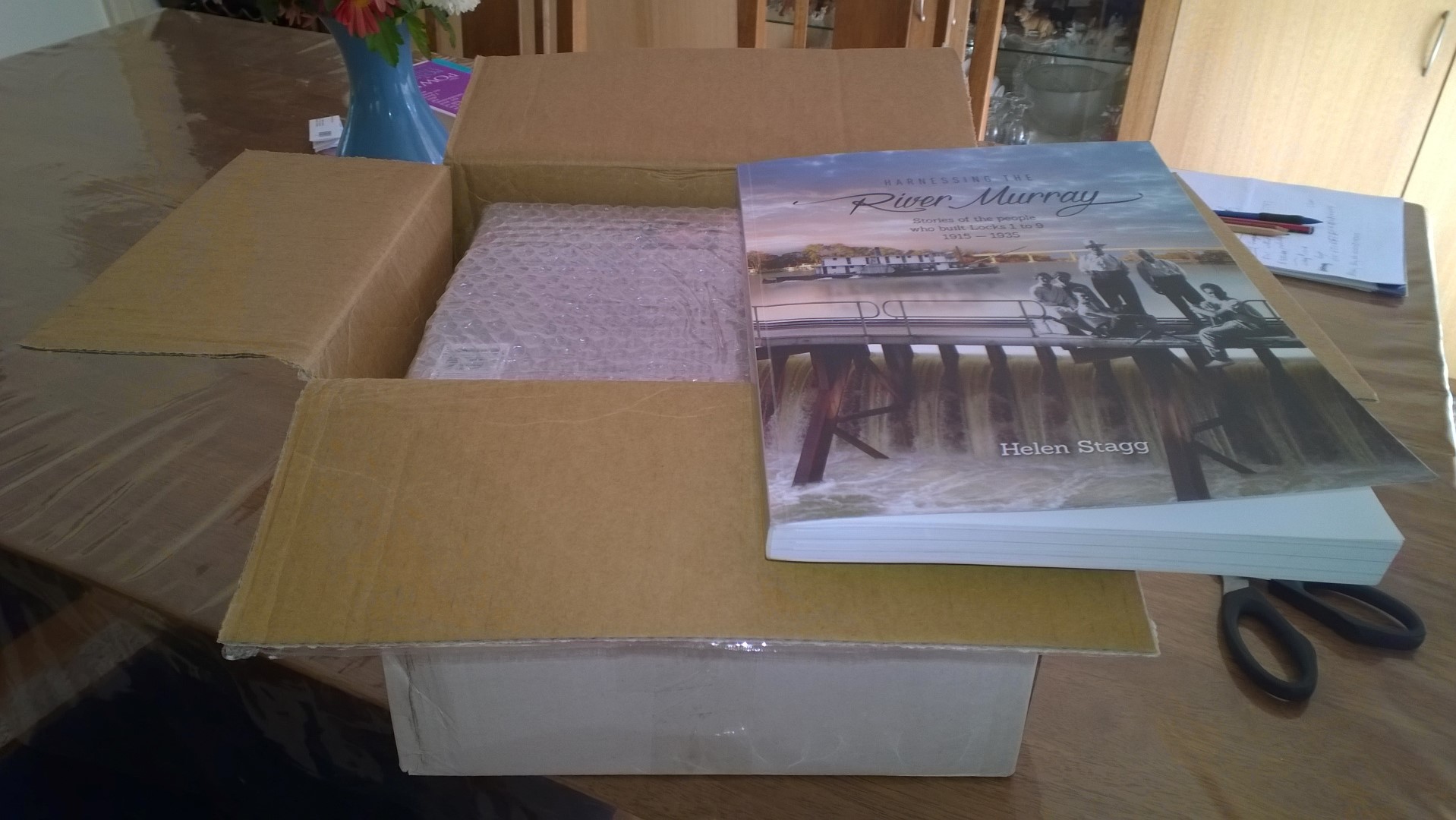
Charlie Adams took part in the oral history research for my book, Harnessing the River Murray, stories of the people who built Locks 1 to 9, 1915–1935 released in June 2015 to mark the centenary of the foundation stone for Lock 1 at Blanchetown, SA. Today I remember him and pay my respects, 9 years after his death at the age of 96.
After the Great Strike of 1919 in Broken Hill, in 1921 Charlie’s father, Charles John Adams, travelled in search of work to Blanchetown with his wife and young family. Charlie, just two years old at the time, spent his childhood moving from one lock site to the next. He lived at Locks 1, 9, 4 and 7, the locks not being built in numerical order, before moving with the family to Mildura, Victoria when Lock 7 was completed.
Although the locks and weirs have endured the ravages of time, the stories of life in the construction camps risked being lost as the last of those who were children at the locks reached a very advanced age; those I interviewed have all now passed away. This is why Charlie Adams’ mandolin story is important.
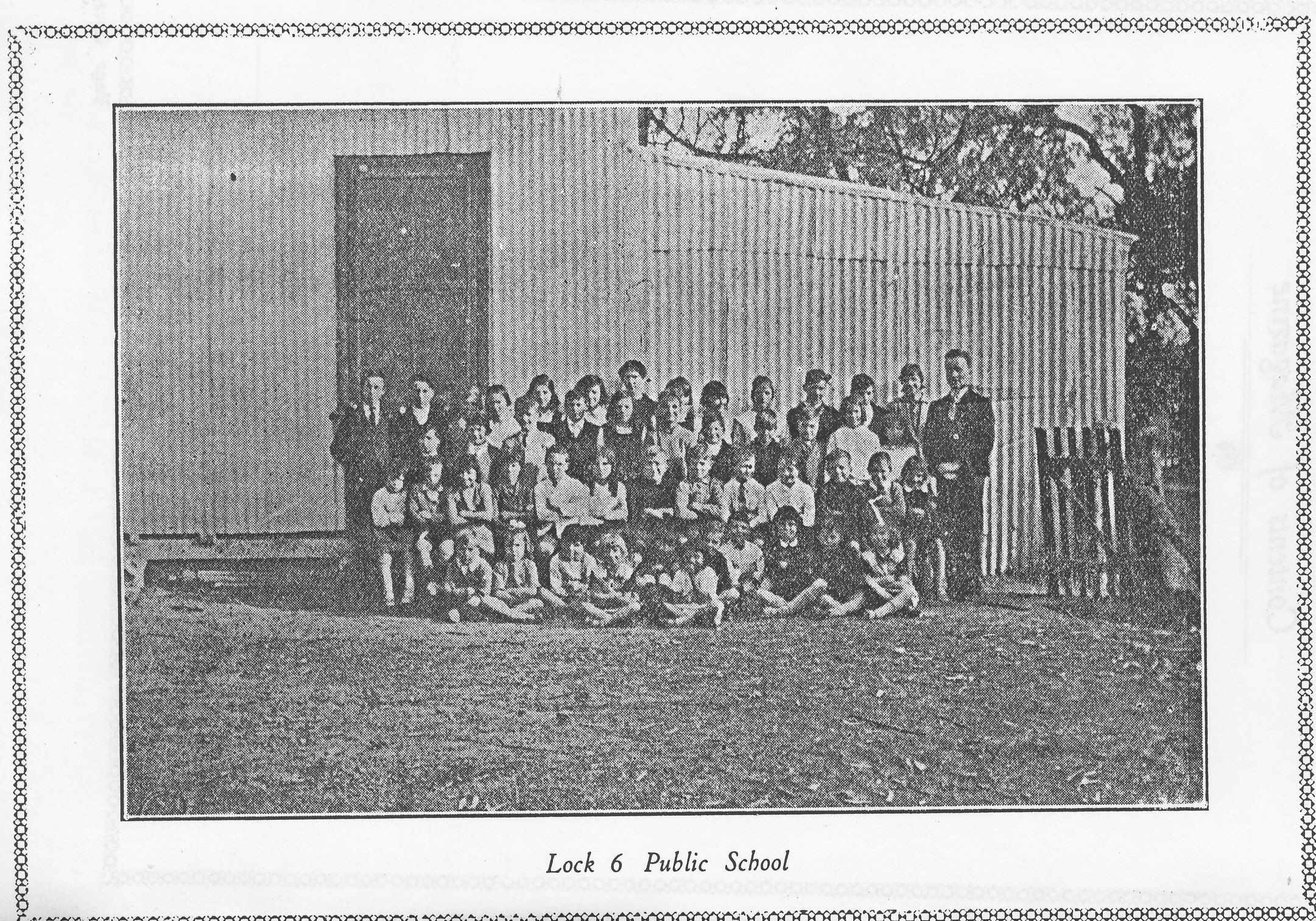
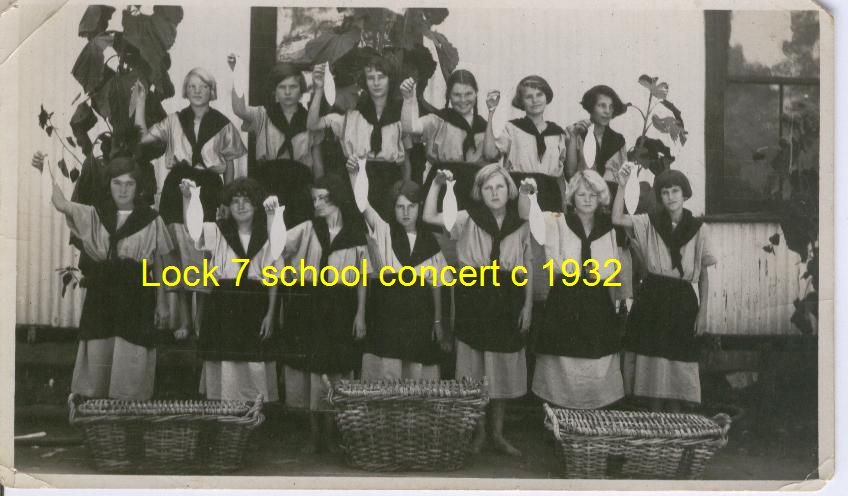
Each of the bustling, mostly remote, rural construction camps required a school and the teachers, under-resourced but assisted by parents and community members, provided a range of extra-curricular activities including music, first-aid courses, gardening programs and gymnastics training. Nella Dormer, wife of one of the Lock 7 labourers, was an accomplished pianist who played at social functions and dances and with no children of her own, she volunteered her time at the school to teach music to the students. She selected a small group of boys with special aptitude, to form a mandolin band to perform at local dances, concerts and during the silent movies. The boys were Max Pearson and George (Snowy) Taylor, aged about 10, Fred (Skinny) Bath (about 13) and Charlie Adams (12).
When I first interviewed Charlie in 2009, I was astonished when he said, ‘I’ve still got me mandolin, moth eaten by now; it’s never been out of the cupboard.’ After interviewing Charlie on several occasions, my requests to see the mandolin were met with a reticent non-committal answer along the lines of it being tucked away out of reach. It was therefore a great surprise one day when I was at his home, and he momentarily left the room, returning with an old brown case bound up with string. As he carefully placed this on the table he said to his wife, ‘Have you got your fly spray out Mum? You may want it to get the moths out!’ As the string was untied, the case literally fell open, the moths having demolished the stitching holding it together. The original music instruction booklet, the E to Z Method for Mandolin or Banjo-Mandolin lay on top of the instrument, and Charlie picked this up as a thousand memories flashed by. Then, almost reverently, he cradled the mandolin saying nostalgically, ‘Here she is. Now that’s how it was in its glory days.’ I asked him when he got the mandolin and he explained:
Mrs Dormer, was a pianist … she got a group of us boys to teach us the mandolin … of course she had a mandolin but we didn’t, so she had to pass it around. … So we were given the opportunity then to buy a mandolin. So Mum and Dad generously bought the mandolin at great expense. It was about £2 somethin’.
Charlie admitted that owning an instrument like this would have been a luxury especially with low wages and a large family. When quizzed about how long since he had opened the case, he replied, ‘What a question, my memory doesn’t go back that far.’
The tuner and the plectrums were also in the case and Charlie showed me how to tune each string by blowing softly into the tuner. As he did so, he remarked ‘We used to tune it off the piano.’ It was intriguing to see him re-imagining those long-ago experiences as he held the mandolin and began to pluck at the strings. Meanwhile, his wife Betty was somewhat otherwise engaged, and armed with a can of spray, she was determined to track down and annihilate any unlucky moths which may have been lurking. Seeming to be transported back in time, Charlie said:
I can’t remember any notes now. E to F … Every good boy deserves fruit. Arhhh… I can remember that much. [With a wistful tone…] I wouldn’t have had this out in thirty years, forty years. See I’d have to learn it all over again.
The mandolin was imported from Italy and judging by the immaculate condition of this aged instrument in the hands of its aged owner, it had always been treasured and cared for. Charlie remarked that he would have played the mandolin for between three and four years. As he posed for a photograph, he bemoaned the fact that his ‘fingers won’t go where they should…….After I left Lock 7 I dont think it played more than two tunes.’ Charlie’s wife Betty, mentioned that I was privileged to see the mandolin as it had never been allowed ‘to be down from the cupboard’ in all the years their family was growing up. No one else in his family had ever played it.
Charlie’s dry wit was a ‘trademark’ and the irony is obvious in his description of the following contest held at Lock 7:
There was a dance on there one night; we used to play our tunes for the dance. They’d screened off the area. And we were behind it and each one of us had to play a tune. That’s how amateur we were then. And, um, they had… the people in the audience, like the adults and that, had to choose which one was the best. And I can remember the other kids went for the hard tunes, like, er, ‘Humpty Dumpty sat on the wall’ and ‘Little Boy Blue’ and all this sort of thing, and there was a piece there always took my (attention) called Blumenlied, so I played this Blumenlied, it’s a very nice piece . And ah, Charlie won the thing…
The band would also gain valuable performance practice at dances at Cal Lal, which Charlie said was about ten miles away from the lock. Up to 100 people would attend these dances from all around, including from Locks 7 and 8, Ned’s Corner, Cowra and other stations in the region. Mrs Dormer would play the fox trots, tangos etc and the mandolin band would accompany her. Charlie recalled the particular night when the boys were accommodated at the Cal Lal Police Station and slept in the adjoining cell block which they all found rather a novelty.
From the first mention of Charlie’s mandolin, I had been intrigued in several ways: by its use by a boy over 80 years ago in the Murray River bush country, and by its ‘life’ journey from Italy to Lock 7 to Mildura. Then the mandolin was stored away while a boy became a man, a husband, a soldier, a father, a grandfather and a great grandfather. Eighty years since it was last played, this exceptional instrument retained a place not only in Charlie’s memory but also in his heart and his home. I felt honoured to have seen the mandolin in his loving care. If only it could talk, what tales it could tell of boyhood in another place and another time. As I bid farewell to Charlie that day, I said:
You should have it in a glass case, so people could look at it and everyone including your grandchildren and your great grandchildren, could look at it and go, wow, tell us about the mandolin, Charlie.
He responded with a casual shrug of his shoulders, which failed to disguise the ambiguity of his dry reply, ‘It’s dying of old age.’
Post script:
At Charlies funeral on June 11 2015, the tune Blumenlied which Charlie had played as a youth on the mandolin, was played during the final farewell.
New Domain Name for my webpage: launching historybyhelen.com
Today I introduce my new domain name, now without the .au!! I invite everyone to change the address in your favourites, as the old domain name no longer points to my page.

10 years since the launch of “Harnessing the River Murray: Stories of the People who Built Locks 1 to 9: 1915-1937” by Helen Stagg
10 years ago today,”Harnessing the River Murray: Stories of the People Who Built Locks 1 to 9. 1915-1935″ was launched. I am not sure if you know what was involved in the writing, or how it evolved so here goes:As a child, I was frequently told stories by my mum of her younger days growing…
ABC Bush Telegraph interview with Charlie Adams and I in August 2014
In August 2014, Charlie, aged 95 at the time, joined me in a live interview for Radio National’s Bush Telegraph Program. This was conducted by phone via the MIldura ABC studios. You can still listen to the short interview (about 12 minutes) on this link. https://www.abc.net.au/listen/radionational/archived/bushtelegraph/lock-history/5670936









 historybyhelen
You must be logged in to post a comment.