Harnessing the River Murray: reader feedback.

It has been very satisfying to receive letters from those who have read my book. Here are some of the comments:

“Well researched, presented, captivating and enlightening. I trust yourWP_20150819_005 book will become part of Australia’s historical archive.” DH
“Just want to say what an excellent work you have produced. It is most interesting to read and is so well produced. Thanks for all your hard work. It is another valuable resource document for many to enjoy.” DT
“Thank you for writing such an interesting book. I had no knowledge of the lock building other than Lock 1. I always imagined that they were built in numerical order.” RH
“It’s fascinating – a wonderful record and great read. So glad you wrote it!” PK
“Just thought that I’d let you know how much I had enjoyed your book. I especially like the illustration on p. 33 of the houseboat….So much more of interest in the book.” DW
“I really enjoyed the book. It gives a great insight into the project and its ups and downs. It would have been tough times especially during the Depression.” JN
“Many thanks for the book!! I already have a line wanting to check it out!” NM, Librarian
“I have now read it and understand a lot more of the place and times.” VM
“It was a great read – I couldn’t put it down until I had finished. Thanks a lot Helen; the Lock 5 history was essential reading for my family research to find its mark. Even though it was a sad outcome, I still think it best to know the truth of the situation. Thank you again for your insightful book.” SV

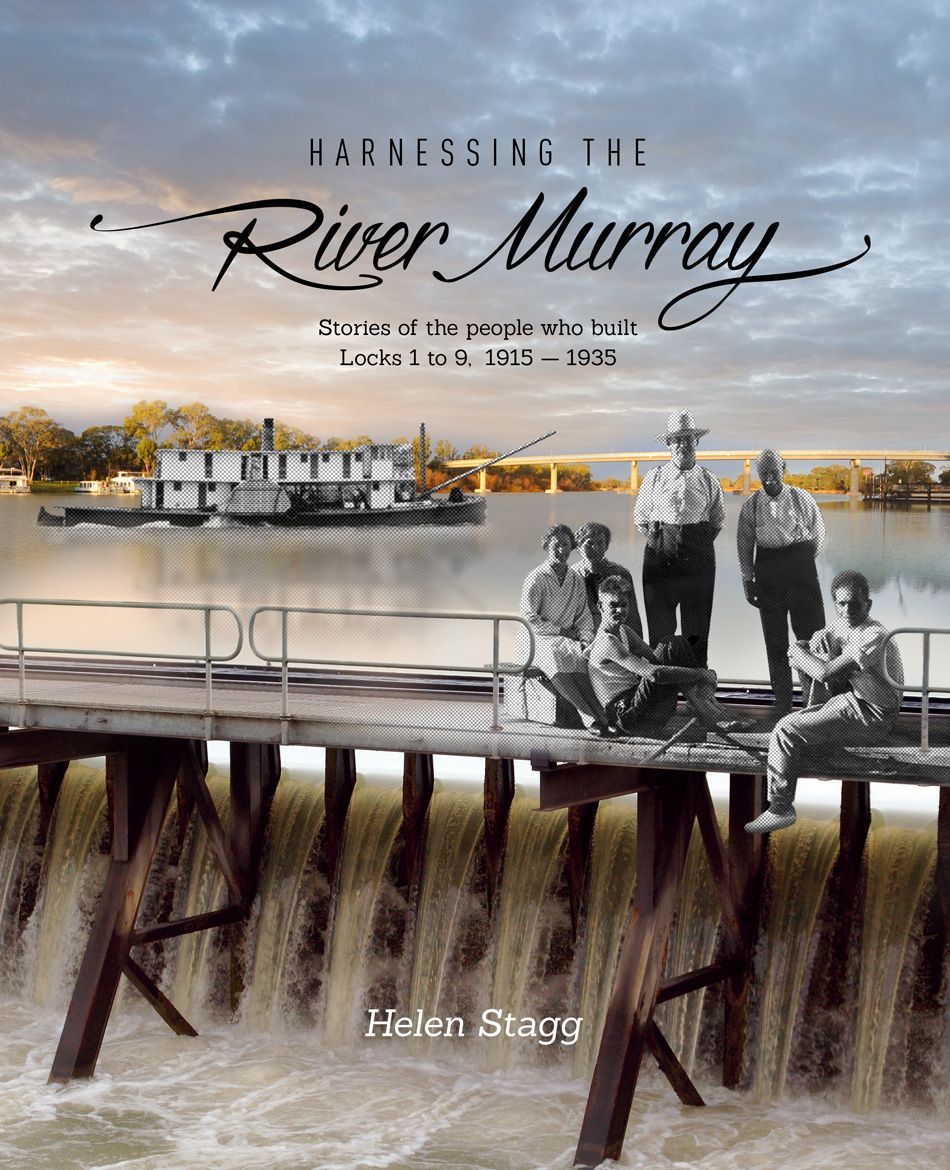
Harnessing the River Murray: stories of the people who built Locks 1 to 9, 1915-1935 by Helen Stagg

Featured

You can preview the book on this link:

The book, with a foreword by Professor Geoffrey Blainey, has 258 pages and over 150 photographs.

The book, with a foreword by Professor Geoffrey Blainey, has 258 pages and over 150 photographs.

SAMPLE-Harnessing_the_Murray


Books can be ordered on-line or by phone from Digital Print, Adelaide. You can arrange to collect the book from their city address if you prefer. (You would need to telephone to arrange this: Freecall – 1800 970 971

Click here for your on-line order from Digital Print


Rest in peace Maxwell George Pearson

Max Pearson, who has inspired much of my work on researching lock and weir construction history, passed away a week ago; a man with a kind and generous heart and a passion for the River Murray, with always a story of life in the lock camps to share. He will be greatly missed.

Max Pearson sharing a story from lock-building days.

Max Pearson sharing a story from lock-building days.

My association with Max began in 1998, when I telephoned him in response to an advertisement placed by a committee he had formed to arrange a reunion of lock-builders’ families. (I had intended to take my mother whose father was also a lock-builder.) My initial phone call to Max alerted me to his passion to tell the stories of the transient lock-building communities. Reflecting on this conversation ten years later, Max seemed a very suitable subject for my Oral History Unit interview, which was part of my Masters in History program in 2009.

After the initial interview and project, I was inspired to pursue my research on the subject of lock and weir construction, and Max put me in touch with others who would have memories to share.

The friendship with Max developed over the years as I undertook the writing of a book, Harnessing the River Murray, the stories of the people who built Locks 1 to 9, 1915-1935, due for release on 5 June 2015, the centenary of the foundation stone for Lock 1 at Blanchetown.

I enjoyed many conversations and phone calls with Max.When my archival research threw up a question, I would ring Max and get an eye-witness answer if I could.

On several occasions, I met Max at Lock 7 site, where the little township once stood during lock construction, and he would point out the locations of the various parts of the camp, the school, the oval, the houses etc.

Max Pearson loved the Murray River and its history. He treasured its presence in his life, and I treasure the memories I hold of Max and our shared love of Lock and weir construction history. Thank you Max! RIP.