continued from the Register 30 May 1916:
—The Social Side.—
The viceregal tourists dashed off in a whirl of dust, and we shoved our twin noses towards Murray Bridge. The afternoon was a lazy delight. As we splashed through the stream Nature seemed to be at rest on a luxurious lounge, and Mr. Holman, Mr. Vaughan, and Sir Elliott Lewis dreamed away the problems of State rights and railway rates and live-stock regulations in a sunny siesta on the decks. A merry hour passed away, with profit to the Red Cross Fund, by a boot cleaning competition, in which Ministers, Speaker Coneybeer (who, as a host, is worth a Government subsidy), and interstate officials against the clock, undertook to remove quantities of Blanchetown dust and mud from ladies’ footwear. Their energy was expressed in a two-guinea donation to Mrs. Vaughan for the fund in whose interest she has given so much of her time and enthusiasm. Mrs. Holman, in handing the money over, said it had been ‘extorted’ from the company, but as every cheer cost the recipient 6d. there was some prestige about the experience. The social entertainment of the journey was Mr. Blundell’s responsibility, and his art of stage management was fitted to more imposing circumstances. There were two very good concerts— one on Saturday and the other on Sunday night. The latter, of course, was thoroughly in the spirit of the day. It had to be, because the Chief Secretary threatened to stop the whole proceedings unless the programme were first submitted to him. We had the services of Mr. Robert Jones, the cultured Adelaide tenor, the elocutionary talent of the Hon. E. Lucas, the unforgettable pathos of Speaker Coneybeer’s “Lucky Jim” and heard Mr Holman’s dramatic tragedy of “Nancy bell”, Mrs Cox’s graceful vocalism and Mr E Chaplin’s vigorous selections-to say nothing at all of the pleasure he gave us in other directions, Messrs W Hobbs and P Rodda were artistic accompanists.
—Home Again.—
With the prospect of getting up in the cold dawn for breakfast, and catching the special from Murray Bridge at 7 o’clock, most of the tourists were early in their bunks on Sunday night. The morning came in a wash of pink, and a few hours later we were back in the sunshine of the city. The Marion and the Ruby kept splendidly to schedule time; in fact, they sometimes raced it. Although there was a heavy fog on the river early on Monday morning, the skippers brought the boats alongside the Murray Bridge Wharf with hours to spare. To the delights of the trip, the able and thoughtful organization of the Director of the Tourist Bureau (Mr. Victor Ryan) contributed in substantial measure. His Excellency the Governor gave a message to the Premier about him. It was to say that Mr. Ryan’s arrangements had made them all very happy, and that he had put himself out for everybody. Mr. Ryan did more than that. He put his wrist out, unfortunately, and for a time suffered considerable pain. The hospitality of the Government was in keeping with the fine scale and dignity of the social festivities throughout conference week — nothing more complimentary could be written.
Category Archives: Random but relevant posts
The wide end of the Murray: splendid possibilities!
continued from The Register 30 May 1916

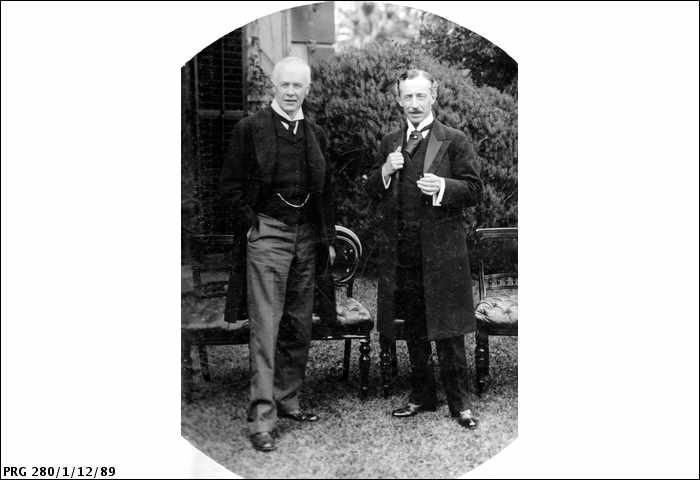
State Library of SA image left Gov General Ronald Munro Ferguson and Governor Galway, grounds of Govt House Adelaide c 1915
—Chat with Governor-General— Sir Ronald Munro Ferguson
The party lost its viceregal prestige at Blanchetown. The Governor-General and Governor left here for Adelaide by motor. Just before Sir Ronald (Munro-Ferguson) when I asked him for a few words of his impressions. Practical, as he always is, His Excellency forgot all about the scenery and went straight into the question of irrigation development. ‘The great advantage of this sort of settlement,’ he said, ‘is that there is no gamble in it. Directly you apply water to the land the gambling element is gone. There is no risk, but security and stability. Australia is always gambling with the rain. Your State is exceedingly fortunate in having the banks at the broad end of the Murray, which hitherto—- ‘
His Excellency broke off the conversation. He was smiling, and hesitating! ‘I don’t know whether I ought to say it,’ he said. ‘Tell me what it is, and I’ll tell you,’ I suggested subtly.
‘Well, it’s this,’ replied Sir Ronald. ‘You’ve got the broad end of the stream, and up to the present you have not utilized it. Never mind! Now you are, with, great rapidity, and we need not be critical, need we? There are splendid possibilities ahead, and the value of this agricultural system is that the men have their wives with them. That encourages thrift, and gives a settler the proper sense of responsibility. And now good-bye, and good luck to the Murray’
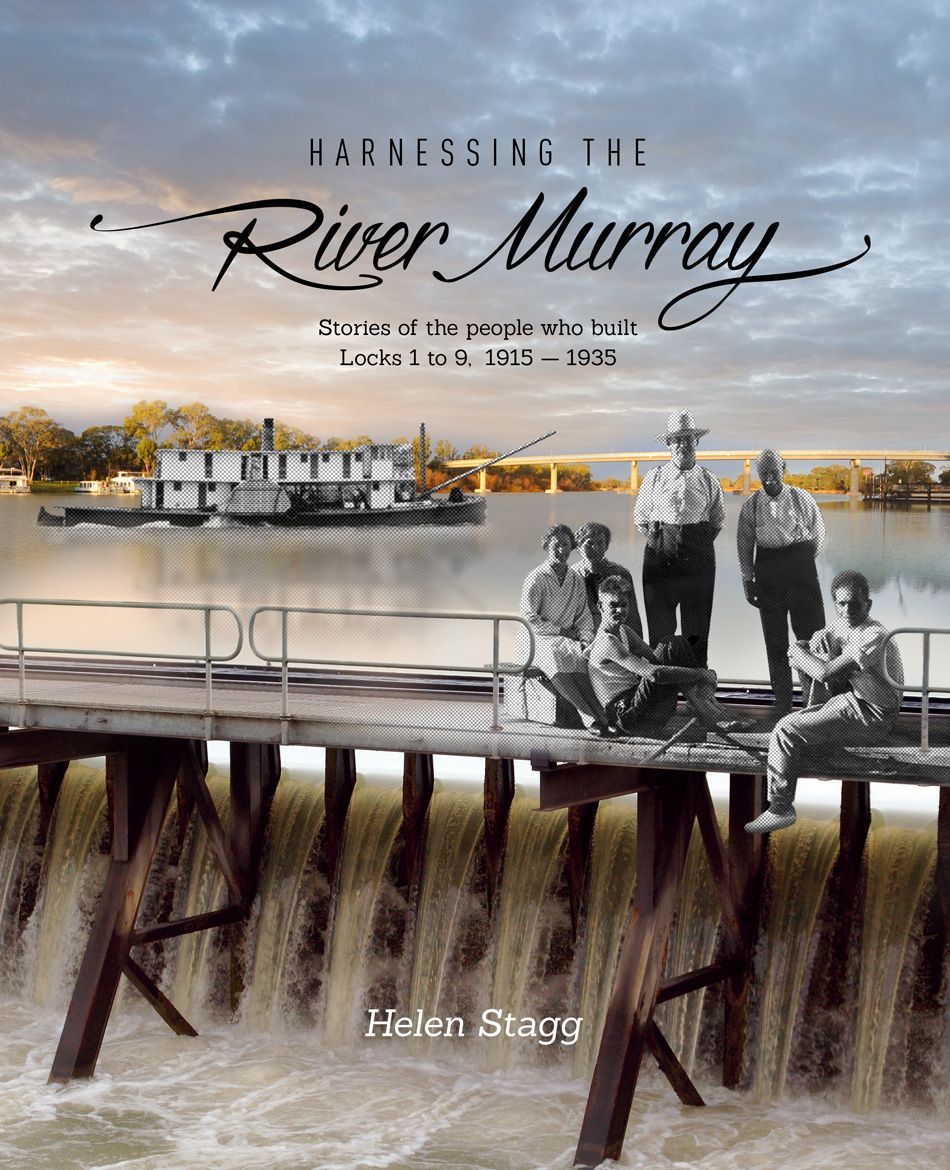
Harnessing the River Murray: stories of the people who built Locks 1 to 9, 1915-1935 by Helen Stagg
Featured
You can preview the book on this link:
Books can be ordered on-line or by phone from Digital Print, Adelaide. You can arrange to collect the book from their city address if you prefer. (You would need to telephone to arrange this: Freecall – 1800 970 971
Click here for your on-line order from Digital Print
Lock 1 – A mass of preliminaries.
continued from yesterday. The Register 30 May 1916.
— At the Lock. —
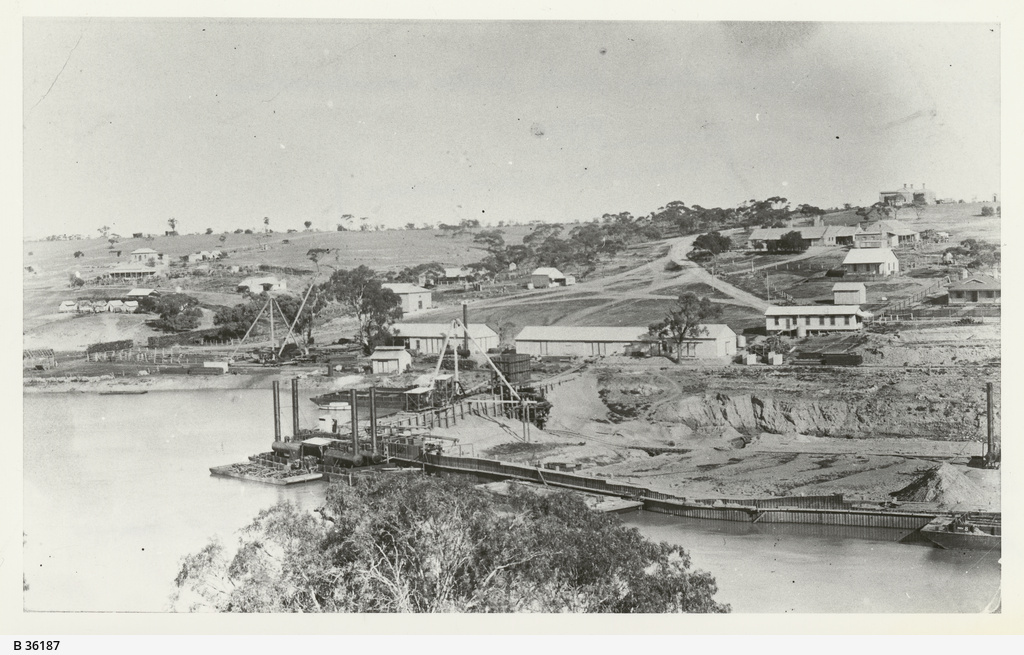
Around behind a brown mass of cliff, with the primitive simplicities of rural homes, and healthy men and brave women and laughing children— who could be happier than they with a river frontage at their very doors and all the unfenced freedom of life — we came upon Blanchetown. It had grown into a centre of industry since we had seen it 12 months before, when His Excellency laid the stone at the lock site. There were a cluster of tin sheds, a concentration of river boats, and derricks shooting into the air. As we approached the landing we saw the stacks of timber, the 1,000-ft. span of the cable way, and the sleeping activities at the coffer dam. Then, among the crowd, shaped up the compact little figure and smiling face of Mr. Cutting, the supervisor of operations, who was soon conducting us over the busy scene. There was nothing to see, and yet there was a lot. Lock building is a mass of preliminaries. The start in getting a start is a big job. Take the work at the coffer dam. They have built around it a fence of interlocking steel on the outside and of stout timber inside. In this space spoil from the river is being built up into a wall, and when all the water has been pumped out the construction of the lock on the river bed will be begun. The digging is done by steam shovels, which empty into the barges. These take the material over to where the scoop is working, dump it in the river again, and then this machine goes down and picks it up and drops it between the walls of the dam. A long journey, but the engineers call it a short cut, and they ought to know. (to be continued)
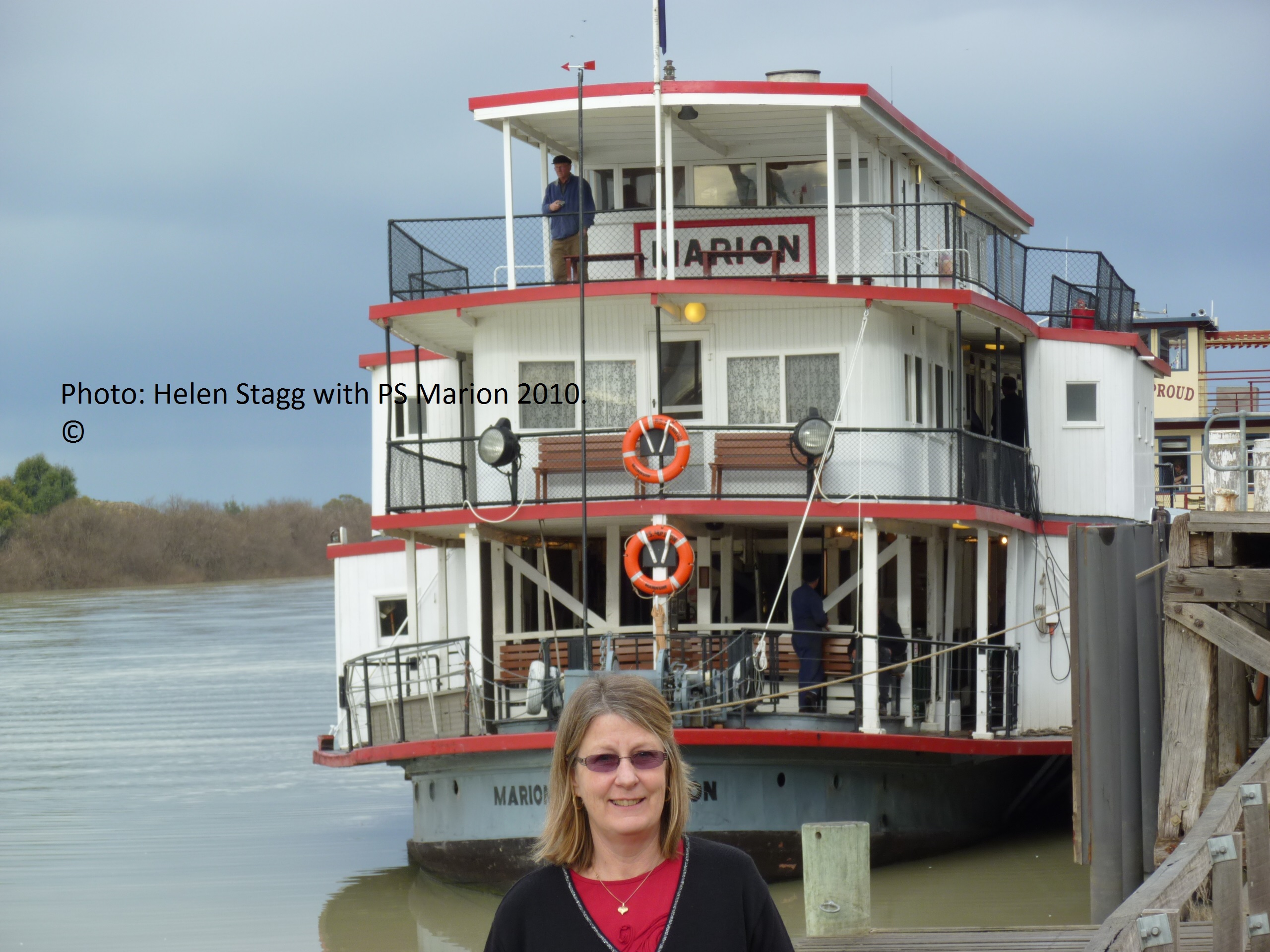
All aboard the PS Marion: one year after Lock 1 Foundation stone was laid.. (continued)
(from the Register 30 May 1916 –one year after centenary)
—Starting the Journey. —
There was a sinister look in the sky when the special drew up at the Murray Bridge wharf. Under the white blaze of the electric light, the Ruby and the Marion, of the Gem Navigation Company— I should really have mentioned the second lady first because she was the flagship— looked like fairy hotels. We were soon all aboard and disposed in our various bunks. The process had been rendered easy by the smooth efficiency of the arrangements, and when it was over there was a capital supper waiting in the dining rooms. We were to be twin ships floating over the bosom of the Murray, for the Marion and the Ruby had been laced abreast, and, with a planked thoroughfare from deck to deck we were as one happy community. And so the alliance remained throughout the whole trip excepting a few hours’ break at the top end. There the river was so tricky in its depths that the boats proceeded in single file, while the skippers, who know every gumtree on the banks and every snag in the river, steered a course as if chased by a submarine. This was the folly of neglect in menacing illustration. After the warm companionship of supper our twin ships shouted, kicked. There were no stars pricking out of the black curtain of the threatening sky, but the funnels sent a whirl of sparks like a dancing banner of fire, and they were not missed. Bending willows pencilled their delicate tracery in shadows on the water, and amid the far-spreading radiance of the steamers’ lights was the grey-white definition of the river banks. Off down-stream to Tailem Bend, we passed under the ghostly perspective of the massive pillars of Murray Bridge, and the next morning, in the murky but restful tones of an early dawn were returning again ‘twixt the verdant triumphs of the reclaimed settlements. As keen as any among the enquiring spectators were the Governor General and our own State Governor. They found the Director of Irrigation (Mr. S. McIntosh) a responsive guide. He was such a big and interesting book of knowledge that wherever he was there was a crowd! And right in the centre of the crowd were Sir Ronald Munro-Ferguson and Sir Henry Galway. They were insatiable seekers after knowledge, and Sir Ronald knew enough to argue the point.
Centenary of locking the River Murray: ‘Getting to know Blanchetown, 100 years on’ continued
(continued from yesterday)…The fame, mind you, is largely an accident of engineering. The first lock might easily have been down somewhere near to Swan Reach, only the riverbed was not so favourable or stable to put the bit and bridle on the runaway Murray. So Blanchetown in a night became the first notable center of applied Australian statesmanship to a problem that was many, many years old. Tickled by their own pardonable vanity, the men who are associated with this great accomplishment of contesting politics like to go up to Blanchetown now and then to see how the triumph looks in the solid imposing phrases of concrete written across 443 feet of water. The trip to the lock was a fitting and picturesque finale to the Premiers’ conference. The leaders of the States had wrangled about the project so often that it was quite a fine idea that they should see the harmony that had come out of the tumult of debate and prejudice and selfishness. On Friday night, therefore, a special train drew away from North Terrace for a few days excursion into the graphic realities of the Murray Riverside. The passengers constituted the most distinguished company which had ever made the journey. There were in it the Governor General, the State governor, the acting Prime Minister, two premiers, ministers from every part of Australia, forestry experts, government officials, and a trio of press men. It was a train well freighted with prestige and ability. We left the city amid persistent predictions of a general rain. For two days, the misguided patriot who presides over the weather office had warned us of a wet and cold journey. Occasionally we were cold with the bracing intensity of the Murray in its early winter mood, but – I say it advisedly- unfortunately we were never wet. That is to say, not by rain. All the way to Blanchetown and back we kept a sharp look-out for rain, and were at no time near enough to make even a nodding acquaintance. If there had been a general fall none of the drops had hit any part of the Murray we were on. (to be continued…)
Getting to know Blanchetown for the centenary of locking the river.
On May 30 1916, the trip made by governors legislators and reporters to Blanchetown was written up at length in the Register and over the next few blogs I will share excerpts from it:
“Once upon a time, not long enough yet to be a tradition, to say you were going to Blanchetown meant nothing. You might almost have said it was to see a red gum on the Murray. It wasn’t anything to make a fuss about, that was why. Blanchetown was just two banks, with a few buildings on this side and a stately regiment of trees drawn up on the other, and between them raced the grey green waters to the sea. The cockatoos made far more noise than all industries and the people put together. Then one day Blanchetown leapt into first rate importance. It did not matter that Murray Bridge had its wharfs and its railways. Nor that Mannum was one of the oldest centres along the stream and that the original boiler of the Mary Anne was there. And Mypolonga could have its swamps and Pompoota its soldier settlers. Blanchetown was quite content to have its lock, the first on Australia’s neglected Nile. Yesterday Blanchetown was like a poor relation in a large family of River towns. Nobody noticed it very much as they went along. It was a simple little community who lived in a simple little house and had a simple little bank balance. That was yesterday. Today Blanchetown talks back at the cockatoos with a clatter of busy machines and tapping hammers. It sits down by the Murray side with an assured dignity of industrial importance. And people take their hats off now as they pass Blanchetown. They speak of it as the lock. Blanchetown is no longer local. It is national.” To be continued…
Two weeks only till we mark 100 years of Harnessing the River Murray.
Are you able to attend?
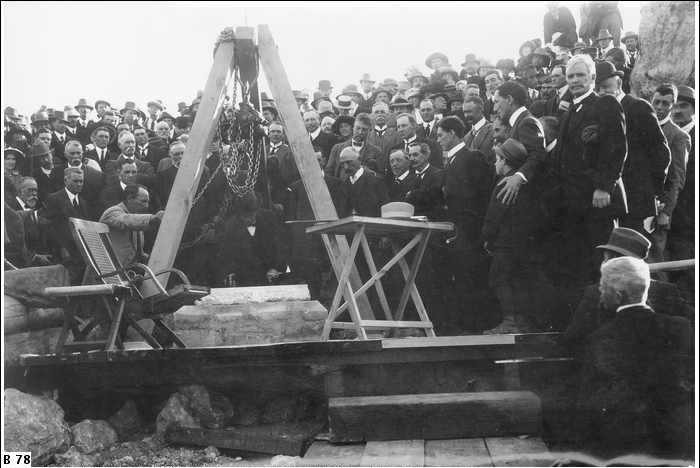
You are invited to join the Honourable Ian Hunter MLC at an event to celebrate the centenary of the laying of the foundation stone at Lock One at Blanchetown.
A book on the history of the installation of locks one to nine, titled Harnessing the River Murray: stories of the people who built Locks 1 to 9, 1915-1935, written by Mildura-based historian, Helen Stagg, will also be launched at the ceremony.When: Friday 5 June, 2015
Time: 11am.
Lunch will be provided at approximately 12.30pm following official proceedings
Where: Lock One, Blanchetown, South Australia
Dress: Smart casual (or period costume)
RSVP: Friday 28 May, 2015 to SA Water’s River Murray Operations office:
PO Box 546, Berri SA 5343 communications@sawater.com.au
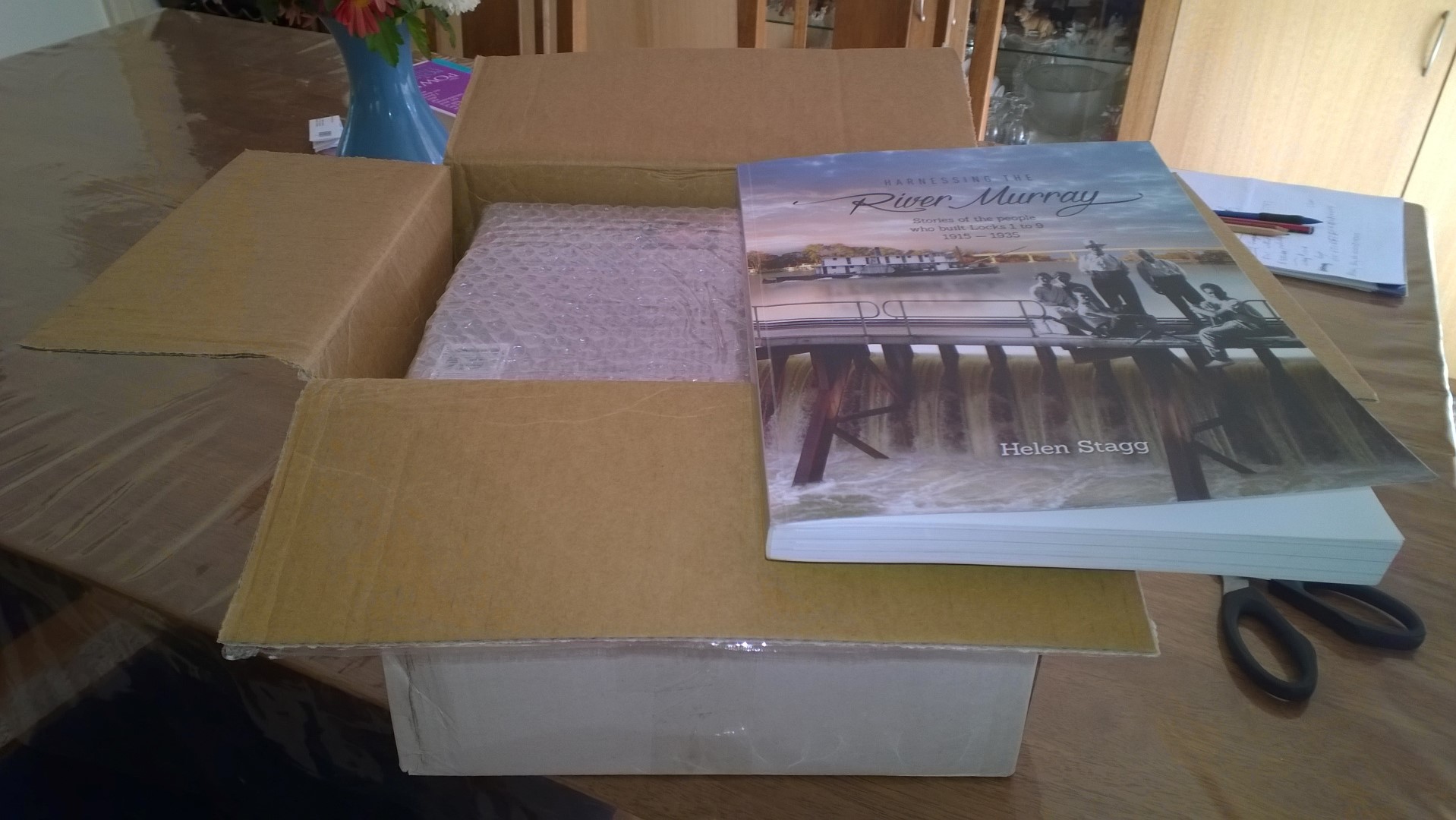
Books are here! I took Charlie his copy today!
Delighted to announce that my books arrived today. Harnessing the River Murray: stories of the people who built locks 1 to 9, 1915-1935 is now available. Only three weeks to go to the Blanchetown launch but pre-launch sales are welcome.
Charlie Adams, one of the seven people whose recollections form part of the text, received book no. 1 today. It was thrilling for me to hand over the result of five years work, some of it informed by rich conversations with him about his childhood on Locks 1 to 9. Click here to order your copy!
Harnessing the River Murray: stories of the people who built Locks 1 to 9, 1915-1935.
Featured
About the book:
This detailed examination of the lives of the men and their families who worked on the lock and weir construction is illustrated with 160 photographs and captures community life in the temporary villages on the banks of the mighty Murray. Through a blend of archival material and oral history, the book reveals the daily struggles and joys of this little-known workforce whose itinerant lifestyle led to them being referred to as ‘the great wandering class’.
With an introduction by Professor Geoffrey Blainey, the book is then divided into two sections. Part One covers the contest for control of the river from the late 1800s and South Australia’s early progress towards securing a ‘harnessed river’ and explains the stages of building a lock, the difficult working conditions and the tough times, cutbacks, accidents, and tragedies. Alongside this, the story develops of the schools, health issues and rich community activity. In addition some rare material illustrates the lives of the women and children and allows a view of daily domestic life. Part Two consists of the Oral History of seven people who spent their childhoods on the locks and their memories add warmth and colour to the story. In addition, the appendices contain an alphabetical list of over 500 accident victims at the works and allow the genealogical tracking of family members at the various locks. Also there are six petitions signed by residents at various locks, another source of names for family historians. The book is completed with a chronology and glossary and a comprehensive endnotes section.
The legacy of the lock building communities stands strong today: the structures which control the flow of Australia’s great waterway, the mighty Murray.
About the Author:
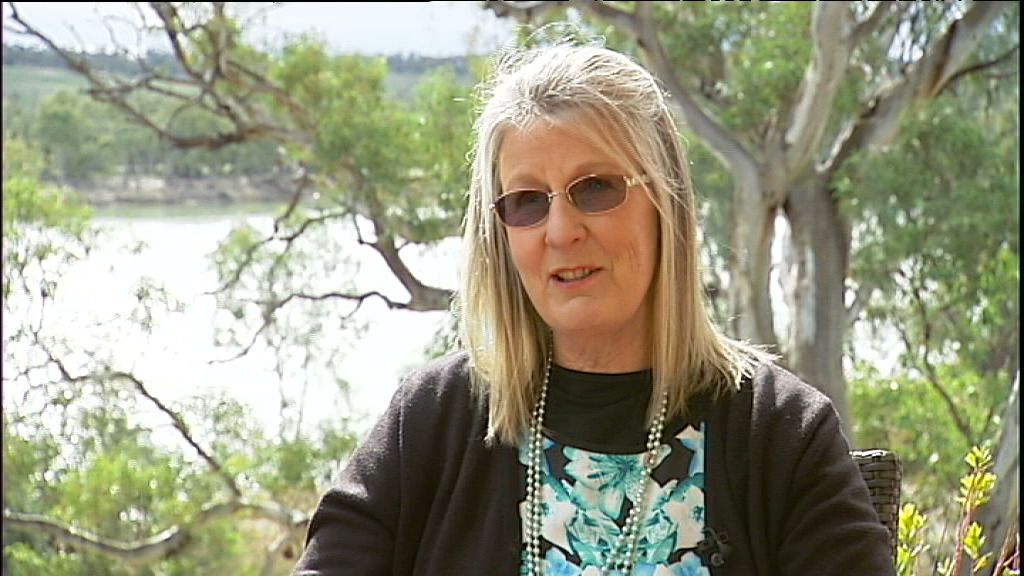
Helen Stagg grew up near th
e Murray River at Mildura in Victoria and completed an Arts degree majoring in history at the University of Melbourne. After teaching secondary school history in Hamilton she took time off to focus on raising her family before re-connecting with the river and her history passion in the 1990s in her hometown Mildura. In 2010 she completed a Master of History at UNE where she began her research into the construction of the first nine locks and weirs on the Murray River. She has presented papers at conferences and published several journal articles on the topic. Her aim in this book is to reveal the little-known stories of the lock-building communities.
If you would like to order your copy of Helen’s book, please contact Digital Print: Print on Demand at Digital Print, Adelaide


You must be logged in to post a comment.