What a great innovation Print On Demand is for modern-day writers. With digital printing, customers can order 1 or 100 copies of many self-published books. Harnessing the River Murray: stories of the people who built Locks 1 to 9, 1915-1935 by Helen Stagg is one such example. Click here to order your copy now! Print on Demand: Harnessing the River Murray
Category Archives: Random but relevant posts

Dr Chenery and Lock 9 1923
I promised a few of my followers that I would publish some of the text from a recent talk at Wentworth.
From October 1921 materials were transported to the Lock 9 site from Lock 1, and a pioneer gang with dray and horses under ‘junior assistant engineer’ William Moffatt Anderson, was clearing the site and erecting the temporary buildings for the workshops and accommodation.
In October 1922, there were 100 people at Lock 9 made up of 47 workers, their wives and children. Knowing the workplace risks and the day-to-day health issues, they successfully petitioned for a contract with a visiting doctor at the works, asking for Dr Chenery of Wentworth who had already been called in on several occasions during the previous twelve months.
Dr Chenery accepted the contract to visit the works on a set day each week and to provide medical services for the workers, their wives and their children. When notified of illness or of an accident requiring urgent treatment, he would make a special visit ‘within a reasonable time’ and he would arrange admission to the nearest government hospital if necessary. Not owning a car, he would hire one to reach the lock. His fee was £8 per week, plus an additional £8 for special visits and as at all the locks, the workers made a contribution of nine pence per week from their wages to help to defray the medical costs. A corner of the rations store was partitioned off to form a room for Dr Chenery’s use.
However, serious issues lay in store for the little town at Lock 9.
The winter of 1923 saw reports in the Sunraysia Daily of ‘blinding rain,’ and one article described the hazardous car trip made on June 5 by the Murray Waters’ Commission on their tour of inspection of lock sites between Mildura and Adelaide. “Several cars were hired and from the very outset the roads were awful: to Renmark the cars ploughed their way through the sea of mud and incessant rain. The bush tracks leading to Lock 9 became impenetrable.”
In that winter, the tragic death occurred of a young mother at the Lock 9 site. In 1923 there was no telephone at Lock 9 and essential calls had to be made from Kulnine Station ¾ of a mile away. When Maria ‘Minna’ Anspach, aged 32, developed pneumonia, Dr Chenery was telephoned from Kulnine Station at 7 pm on the evening of 3 August. However, he was unable to obtain a car and he gave instructions for her care by telephone. He was phoned again by the engineer at 2 am, and asked to come at once; still not possible! Early the next day, Chenery phoned and was informed that Minna Anspach had passed away several hours earlier.
Minna Anspach’s death left husband Leslie with four children, the youngest of whom, Victor, was just three years old. The close-knit community was reeling and shocked as this young woman was much loved in the little town. Her death mobilised them, and just seven days later, Walter Parker and Robert Hawkes wrote the covering letter for a petition signed by eighty-five people demanding improved conditions at the camp.
They asked for a resident qualified nurse with a small consulting room, and the right to call the doctor at the nurse’s request as well as for a government car to be stationed at the lock-works in order to drive cases of serious accidents and illness to hospital. They also noted in this letter that Dr Chenery had indicated his unwillingness to continue at the lock.
The petition led to a departmental inquiry into the events around Mrs Anspach’s death including into Dr Chenery’s attention to his duties at the lock. Engineer Johnson’s full report noted that there had been two periods during which the doctor had been unable to visit as required because of the exceptionally bad road conditions, 13 days in June and 11 days in August. On two occasions, the doctor had been ‘stranded’ at the lock for the night, unable to safely make his journey back to Wentworth.
It was to these comments on his absence that Dr Chenery took umbrage, noting the implied neglect of his duties on the few occasions he had been unable to make his weekly visit. He wrote a lengthy letter in his own defence:
September 16 1923 from Dr Chenery to the Commissioner of Public Works Adelaide. (some excerpts)
Dear Sir, …….
Regarding the death of Mrs Anspach: this occurred as a result of acute lobar pneumonia- she had partially recovered from a severe attack of influenza. I saw her on the Wednesday and she had been up and about that day but looked ill and I told her she was overdoing it. On Friday evening, they rang up from Kulnine station, asking me to come down at once as she was taken very ill. The roads at that time were barely passable in full daylight, as numerous side tracks and detours through rough country had to be followed, and I felt convinced that I should never get through at night even if I could find a driver to take on the trip. I gave them instructions by telephone and said I would leave at daylight on Saturday. In the morning at daylight I went to every garage in town and failed to get a car. At about 8 am I rang up Kulnine and they told me that they heard that the woman had died in the early hours of the morning.
As I still wished to go down to give them the certificate of death and make things as easy for them as possible, I at last managed to get Mr Spencer Williams of Bagot, Shakes and Lewis, who was visiting the local branch from Adelaide, to come to the rescue. That was the reason I did not arrive until 4:30 pm.
An experienced woman, who had trained as a nurse and was at that time staying with the resident engineer, was with the patient all night and carried out every telephone instruction. From her report I feel convinced that the cause of death was acute heart failure supervening on an attack of post-influenza pneumonia. I also feel sure that had I been there from the onset nothing I could have done would have saved the poor things life. This is really the only acute case of illness that has occurred during my eight-month attendance.
………As regards my informing some of the residents that I did not wish to continue my attendance there, I did say to some who were inclined to be sarcastic and remarked that “they thought I had forgotten them” etc. after I had just completed a bone racking journey of three hours’ duration to cover the 30 miles, ” well if anyone else wants the job they can have it.”
……. My conscience is clear. I have given them the best attendance it was humanly possible to give under the circumstances of one of the worst winters on record, as far as roads are concerned, over a road that is, admittedly, the worst in the district. The number of cars available for hire in our small town is strictly limited and each one of them has been more or less constantly out of action.
In conclusion, I may say that during 25 years of practice I have never yet wished to attend anyone who did not want me and I shall not ask to do so at this late period. I therefore have pleasure in asking you to accept my resignation as from the end of the present month which marks the end of the quarter. I am, Sir, yours obediently. A Chenery
At that stage, the EIC Department decided to appoint a resident medical officer at a salary of £500 and Dr A V Henderson, father of Dr Neil Henderson of Mildura, started work at the site from 23 January 1924. This coincided with the connection of a trunk line telephone through Rufus River to Renmark. Kulnine Station was still used for phone service to and from Mildura. A four roomed cottage was completed and made available for Dr Henderson’s use as a cottage hospital and he looked after the health needs of Lock 9 on site till the completion of work in 1926.
Post script: Dr Arthur Chenery had been born at Mansfield, Victoria, in 1869 and was educated at University of Melbourne and Kings College Hospital, London. He had practised at Port Augusta, Sale, Tocumwal and then at Wentworth from 1916-44. He was a Foundation member of the Royal Australasian Ornithologists Union 1901, and its president from 1930-31 and served Wentworth as mayor for a time.
©Helen Stagg February 2016 (This script is for research purposes only. No unauthorised copying.)
Sharing is Caring...

Dr Arthur Chenery
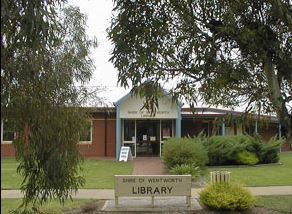
This Thursday evening, 4 February, 2016, I am delighted to be the guest speaker at the AGM of the Wentworth Historical Society, 5.30 pm at the Wentworth Shire Library
The topic for my presentation: Doctor Chenery and the death of Minnie Anspach at Lock 9 in 1923
This talk details how the workers at Lock 9 received medical attention from Wentworth’s well-known Dr Chenery in the early years of construction, 1922-1923 and how the tragic and untimely death of a young mother changed these arrangements. I will also outline other Wentworth connections with the construction workers at Locks 7 and 9, including stories associated with some burials at Wentworth cemetery.
Find out why Dr Chenery said: “During 25 years of practice I have never yet wished to attend anyone who did not want me.” (Dr Chenery, 16 September 1923.)
I hope to see you there if you are in the vicinity.
http://visitwentworth.com.au/events/wentworth-historical-society-annual-general-meeting/
Contact: Jenny McLeod
Address: Wentworth Shire Library, Short Street, Wentworth
Telephone: 03 5027 3211
Email: historical@wentworth.nsw.gov.au
Sharing is Caring...

Australia Day Reflections: Lock builders’ legacy.
The attached link is the text of my Australia Day Speech at Red Cliffs today.
2016 01 26 Australia Day at Red Cliffs
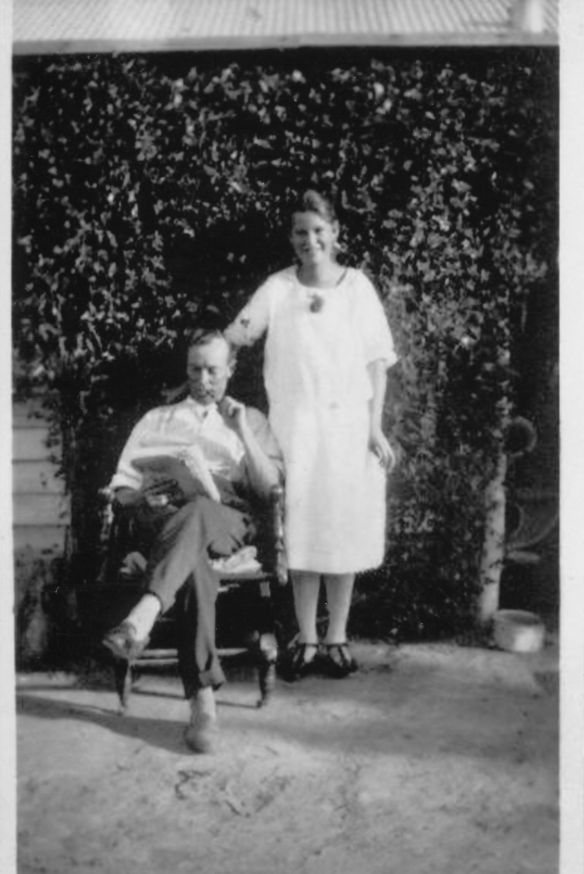
Bertie Pearson, 1923 recuperating after his accident, with his daughter Anne.
Sharing is Caring...

Happy Australia Day:Beneath our radiant Southern Cross, We’ll toil with hearts and hands…
Today I was honoured to be invited as Guest Speaker at the Red Cliffs Community Australia Day Breakfast at Barclay Square in Red Cliffs. A good crowd gathered for the traditional barbeque and a real sense of community was evident.
Several descendants of Lock-builders were present, including Sheree Keating, (2x great grand-daughter of Ernest and Mary Rains), Jenni Gowers, (great grand-daughter of Ernest Rains), Ian Jepson, (great grandson of Charles John and Florence Emily Adams and Brendan, (my son, great grandson of Arthur and Florence Rains).
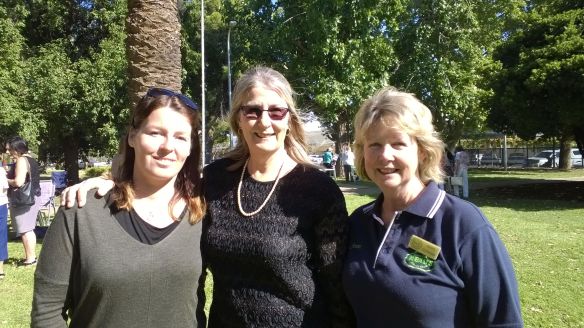
Lock descendants gather for Australia Day, left to right: Sheree Keating, Helen Stagg and Jenni Gowers.
Sharing is Caring...

Celebrate Australia Day at Red Cliffs!
2016 Red Cliffs Australia Day Breakfast & Awards.
Why not consider celebrating Australia Day at Red Cliffs if you are in the Sunraysia Region?
I am honoured to have been invited to be guest speaker on the morning. I am scheduled to speak about 8.40 am.
When: Tuesday, 26 January 2016 08:00AM to 10:00AM.
Breakfast will be served from about 8.20.$5 for adults, $3 for children.

Sharing is Caring...

Evelyn Rains: a lonely birth!
Once upon a time, 97 years ago, a 38 year old man was working as an engine driver at the Lockworks at Blanchetown. He and his wife were living there under canvas with their 4 children under 8 when their fifth child was due to be born. Possibly because they had previously lived at nearby Swan Reach and may have known the midwife there, the young 25 year old woman returned to Swan Reach for the birth. And so it came to pass, that on this day, 97 years ago, young Evelyn Rains was born.
In later life, Evelyn recalled the story her mother had told her of the day she was born: “I was born in a tent at Swan Reach, South Australia, just me and Mum. While waiting for the mid-wife, Mum delivered me and laid me on her tummy till help came. It was January 20, 1919.”
Young Evelyn spent her entire childhood growing up in the lock camps till the family moved to Mildura when she was about 15.

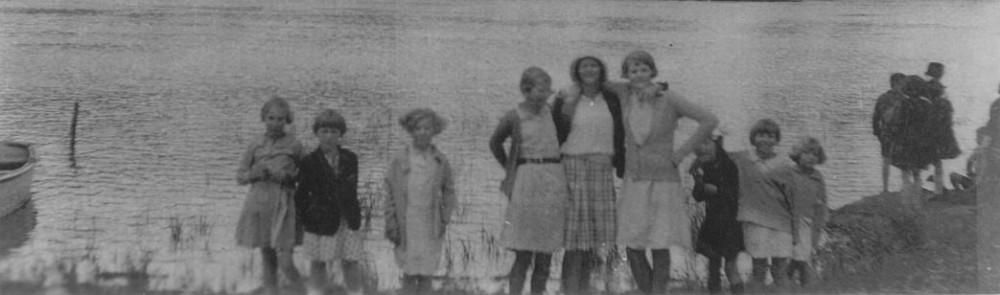
L to R: Les, Evelyn, (my mother) Sid, Walter,Gladys. Probably Lock 1 Blanchetown, c 1920
Sharing is Caring...

Happy New Year!
 What a fabulous year 2015 has been, celebrating the centenary of lock building on the Mighty Murray. So grateful that my years of research and writing finally came to completion with the publication of the history which pays tribute to the men and women whose lives and work led to the accomplishment of this great engineering feat.
Thanks to all who have supported my work in any way and to those who have purchased a copy of the book. My life has been greatly blessed by meeting so many wonderful people. Happy New Year everyone!
Sharing is Caring...

Great summer holiday reading.
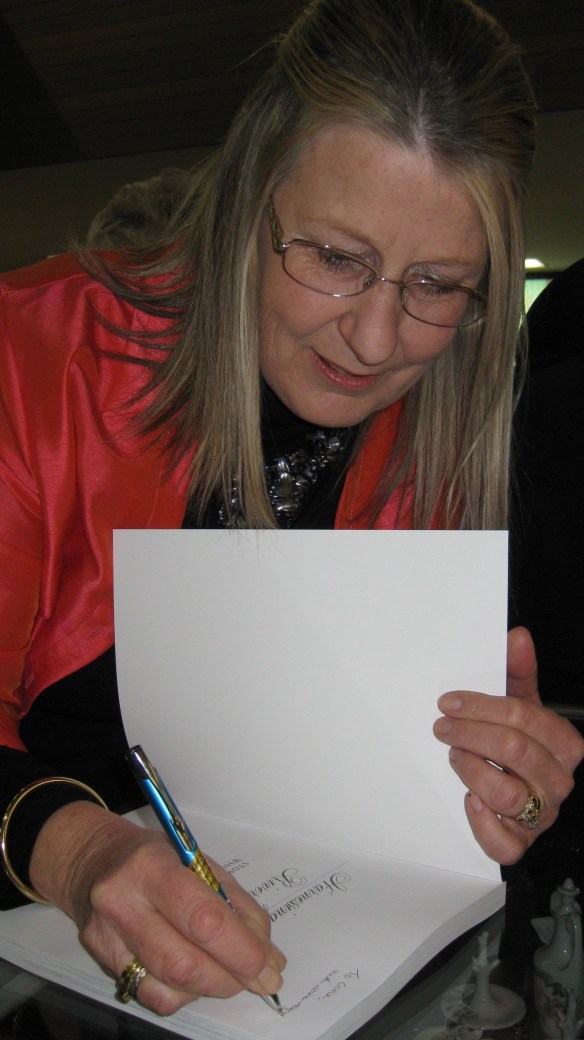
Author and historian Helen Stagg signing a copy of her newly released social history of the Lock construction workers at one of the Book Launches in 2015.
Retail outlets: Harnessing the River Murray, Stories of the people who built Locks 1-9. 1915 to 1935, by Helen Stagg. (RRP $44.95)
Adelaide: Digital Print, Print on Demand, 135 Gilles St Adelaide, 08 82323404 Order here!
Mildura: Book City, 58 Langtree Avenue Mildura & Mildura Visitor Information Centre.
Echuca: Murray River Paddlesteamers, 57 Murray Esplanade, Port of Echuca
Mannum: Mannum Dock Museum and Information Centre, 6 Randell Street.
Renmark: T H Books 173 Murray Street Renmark & Olivewood Museum
Swan Reach: Swan Reach Museum, 22 Nildottie Road, Swan Reach, SA. Phone 08 85702019
Wentworth: Clarkes Newsagency, 55 Darling Street, Wentworth

Sharing is Caring...

Christmas 1924 at Lock 9 camp
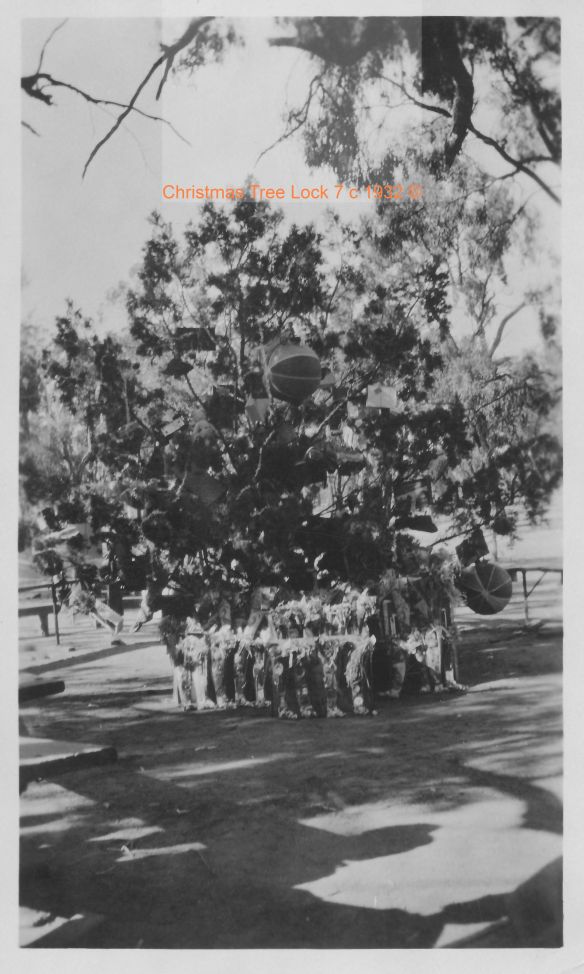
This tree at Lock 7 depicts a similar one to what the community would have put up at Lock 9 years earlier.
On December 13, a heatwave of above 100 degrees F came to an end when about an inch of rain fell, a steady soaking rain.
On Monday December 8, the Georgian vaudeville company visited the camp and a reasonable attendance enjoyed the entertainment. On Wednesday December 10, a concert organised by Tom Irvine was given before a crowded house, the proceeds being in aid of the children’s Christmas tree and sports. A varied and entertaining program consisted of an overture by Connie Reed, songs by Mrs Florence Reed and Mrs Mary Grosse, duets by the Gorman and Reed girls, quartets by Misses Gorman and Messrs Gorman and Bowell, songs by the schoolchildren and comic items by Bertie Pearson and Bertie Bowell, violin and mandolin numbers by Albert Charlton and songs by Arthur Gorman. A dance followed.
On Christmas Eve, a wonderful Christmas tree was arranged for the children. The tree was erected on the lawns adjacent to the men’s quarters and it was decorated with toys, balloons and Christmas stockings. The many little electric bulbs illuminated the tree amid the surrounding darkness. Father Christmas, (Oliver Edwards) arrived by car and the children excitedly greeted him as he proceeded to distribute the toys. 122 children received a toy and stocking each. A plentiful supply of fruit, lollies, and cool drinks was provided. Mr. and Mrs. Albert Charlton provided music with piano and violin and there was plenty of dancing and games.


You must be logged in to post a comment.