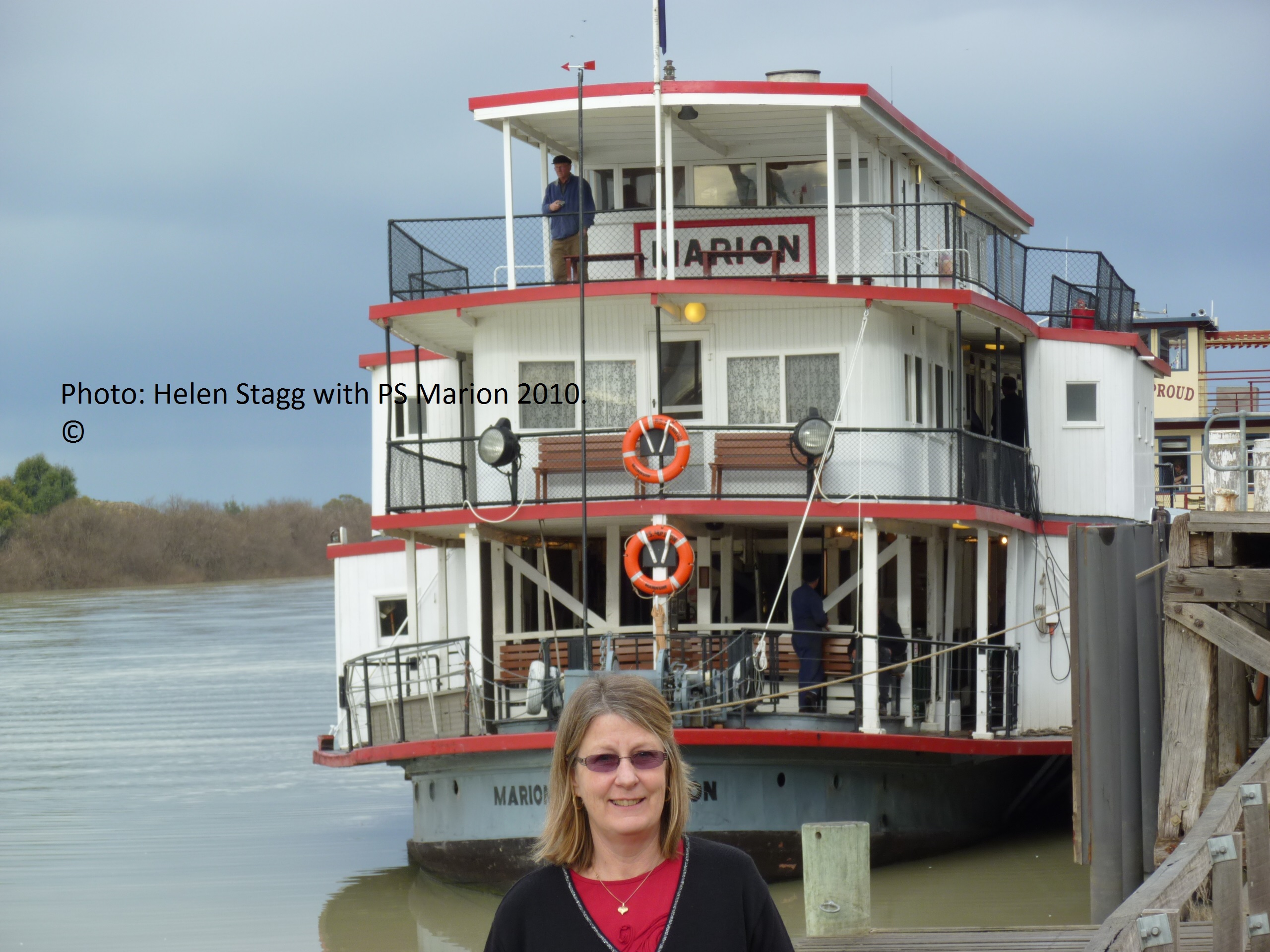
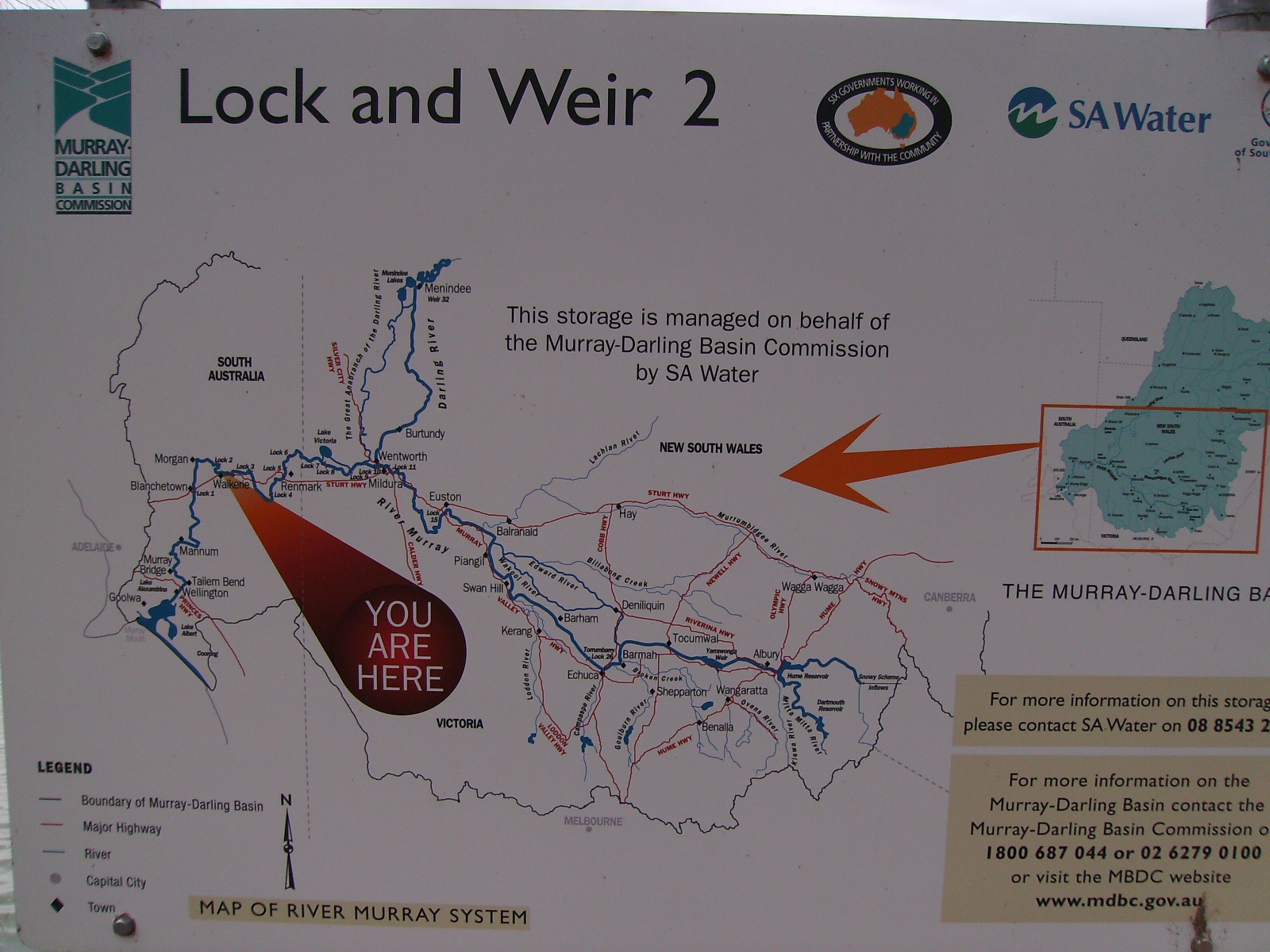
On June 5 Blanchetown will come alive as people gather to mark the centenary of the Foundation Stone Ceremony at Lock 1. This was the official commencement to the program to harness the Murray River with the construction of locks and weirs. Over 100 politicians caught the train to Murray Bridge before boarding the PS Marion for the rest of the trip to Blanchetown on June 5 1915.
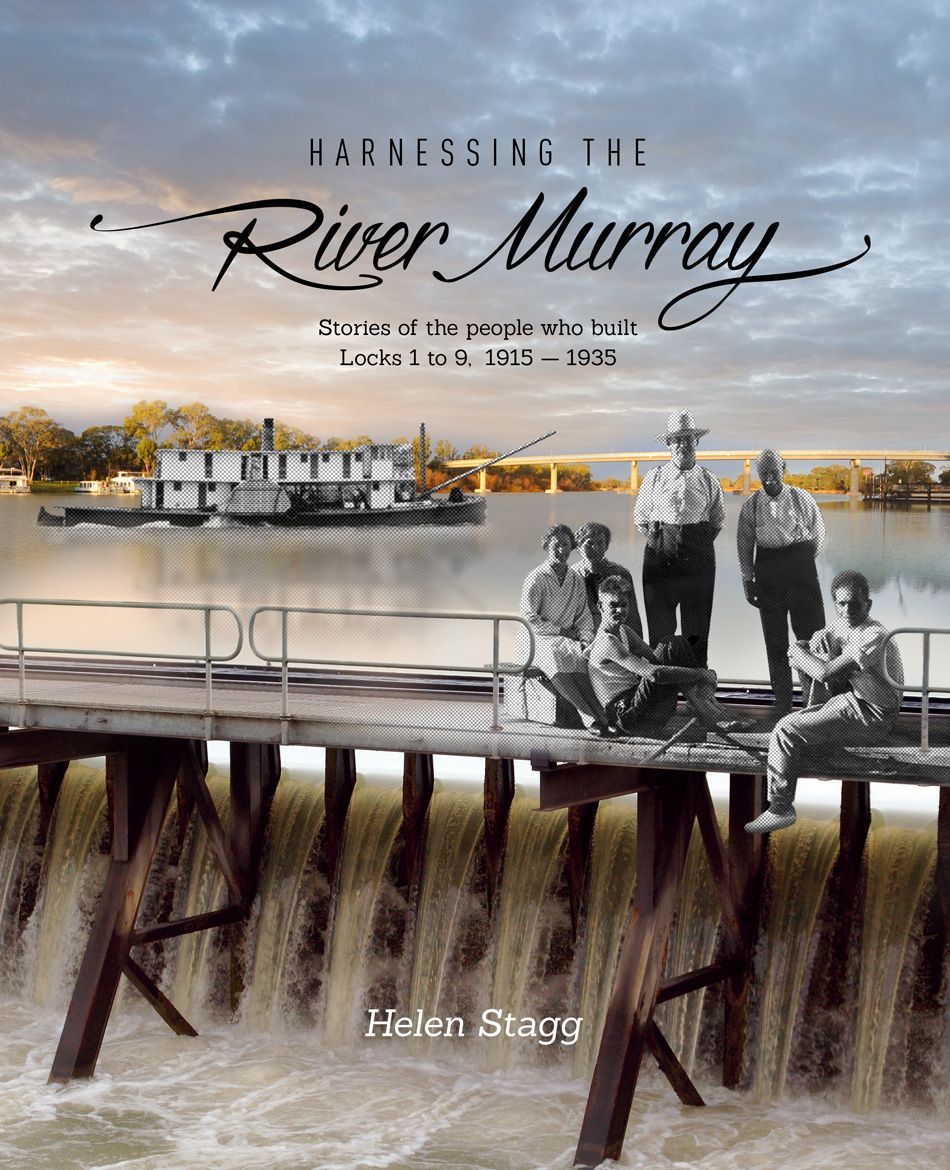
Watch this space for updates on the day’s events. The book ‘Harnessing the River Murray: stories of the people who built Locks 1-9, 1915 to 1935’ will officially be launched. The book comprises over 240 pages and has over 150 old photographs illustrating the work and lives of the lock builders and their families. RRP is $44.95 Order your copy here.
Book launch and celebration of the centenary of locking the Murray River
Only seven weeks to go to the launch of “Harnessing the River Murray, stories of the people who built Locks 1 to 9, 1915-1935” by Helen Stagg. 
On June 5 2015 at Lock 1 Blanchetown, SA, there will be a re-enactment of the ceremony which took place one hundred years ago to lay the foundation stone for the commencement of Lock 1 and of the great scheme to harness the River Murray. Helen Stagg’s book which is the culmination of over five years of research will be officially launched and will be on sale. The book comprises over 250 pages of history, including oral history, as well as more than 130 photos from the time. RRP is $44.95 (plus postage of $17.50 which covers up to 3 books.)
Rest in peace Maxwell George Pearson
Max Pearson, who has inspired much of my work on researching lock and weir construction history, passed away a week ago; a man with a kind and generous heart and a passion for the River Murray, with always a story of life in the lock camps to share. He will be greatly missed.
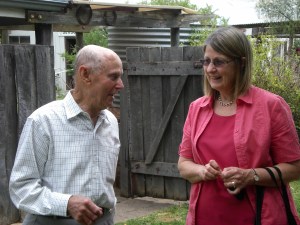
My association with Max began in 1998, when I telephoned him in response to an advertisement placed by a committee he had formed to arrange a reunion of lock-builders’ families. (I had intended to take my mother whose father was also a lock-builder.) My initial phone call to Max alerted me to his passion to tell the stories of the transient lock-building communities. Reflecting on this conversation ten years later, Max seemed a very suitable subject for my Oral History Unit interview, which was part of my Masters in History program in 2009.
After the initial interview and project, I was inspired to pursue my research on the subject of lock and weir construction, and Max put me in touch with others who would have memories to share.
The friendship with Max developed over the years as I undertook the writing of a book, Harnessing the River Murray, the stories of the people who built Locks 1 to 9, 1915-1935, due for release on 5 June 2015, the centenary of the foundation stone for Lock 1 at Blanchetown.
I enjoyed many conversations and phone calls with Max.When my archival research threw up a question, I would ring Max and get an eye-witness answer if I could.
On several occasions, I met Max at Lock 7 site, where the little township once stood during lock construction, and he would point out the locations of the various parts of the camp, the school, the oval, the houses etc.
Max Pearson loved the Murray River and its history. He treasured its presence in his life, and I treasure the memories I hold of Max and our shared love of Lock and weir construction history. Thank you Max! RIP.
Evelyn Rains: My Inspiration
I owe my fascin
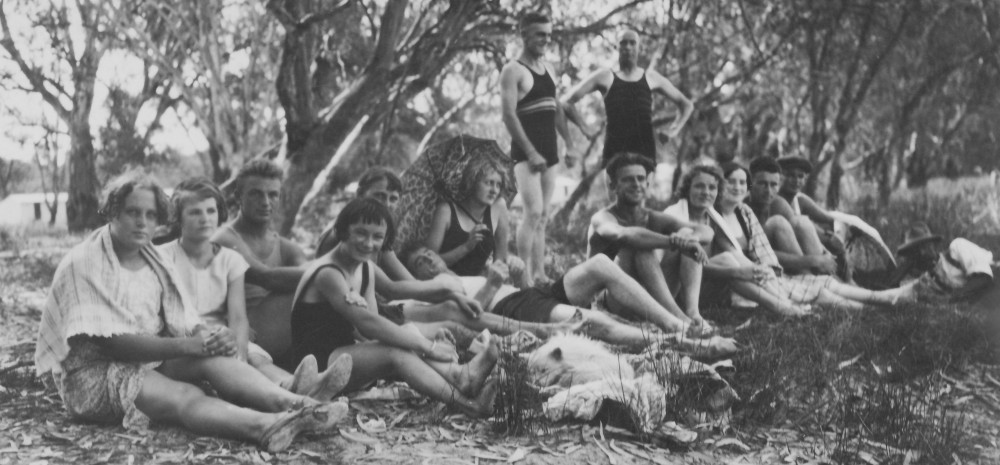
ation in Lock history to the stories my mother Evelyn told me when I was growing up about her childhood on the various locks where her father worked during construction. When the family were living at Lock 5, Evelyn and her brothers and sister wrote letters to the Children’s Column in the Renmark paper.One of them is attached for you to read, (1926 08 31) Today would be her 96th birthday and I honour her memory and the passion she instilled in me about our shared heritage.
Little John Henry Bugg
On 23 October 1924, an unspeakable tragedy occurred at Lock 2. Ten year old John Henry Bugg, whose mother had died when he was seven, was visiting his uncle Leonard John Welsh at the lock camp. In the unfamiliar environment of the river, the small boy had fallen into the river and drowned. The resident engineer lodged an official report on the incident and stated that due to the isolation of the locality, he had arranged for a coffin to be made so that the body could be sent to Adelaide.
2015: Centenary of Lock 1 Foundation Stone
I am very excited to welcome 2015. This is the year I have been working towards with my writing. Planning to launch my book in June. Watch this space. Click Follow if you want to be alerted about my progress with the history of the workers on the Murray River Lock and Weir Construction.
2014 09 12 mildura weekly Helen_s article
MW Page 19
The Mystery Poem….FOUND!!!
Further to my previous post regarding “Can you help with a song” I have exciting news to share. On re-visiting a lady who attended school at Lock 7 between 1930 and 1934, and asking her again if she could recall the item the girls performed, she thought for a minute before a flash of insight dawned and she said Wynken, Blynken and Nod! I was overjoyed. Here is the text.
Wynken, Blynken, and Nod one night
Sailed off in a wooden shoe —
Sailed on a river of crystal light,
Into a sea of dew.
“Where are you going, and what do you wish?”
The old moon asked the three.
“We have come to fish for the herring fish
That live in this beautiful sea;
Nets of silver and gold have we!”
Said Wynken, Blynken, and Nod.
The old moon laughed and sang a song,
As they rocked in the wooden shoe,
And the wind that sped them all night long
Ruffled the waves of dew.
The little stars were the herring fish
That lived in that beautiful sea —
“Now cast your nets wherever you wish —
Never afeard are we”;
So cried the stars to the fishermen three:
Wynken, Blynken, and Nod.
All night long their nets they threw
To the stars in the twinkling foam —
Then down from the skies came the wooden shoe,
Bringing the fishermen home;
‘Twas all so pretty a sail it seemed
As if it could not be,
And some folks thought ’twas a dream they’d dreamed
Of sailing that beautiful sea —
But I shall name you the fishermen three:
Wynken, Blynken, and Nod.
Wynken and Blynken are two little eyes,
And Nod is a little head,
And the wooden shoe that sailed the skies
Is a wee one’s trundle-bed.
So shut your eyes while mother sings
Of wonderful sights that be,
And you shall see the beautiful things
As you rock in the misty sea,
Where the old shoe rocked the fishermen three:
Wynken, Blynken, and Nod.[2]
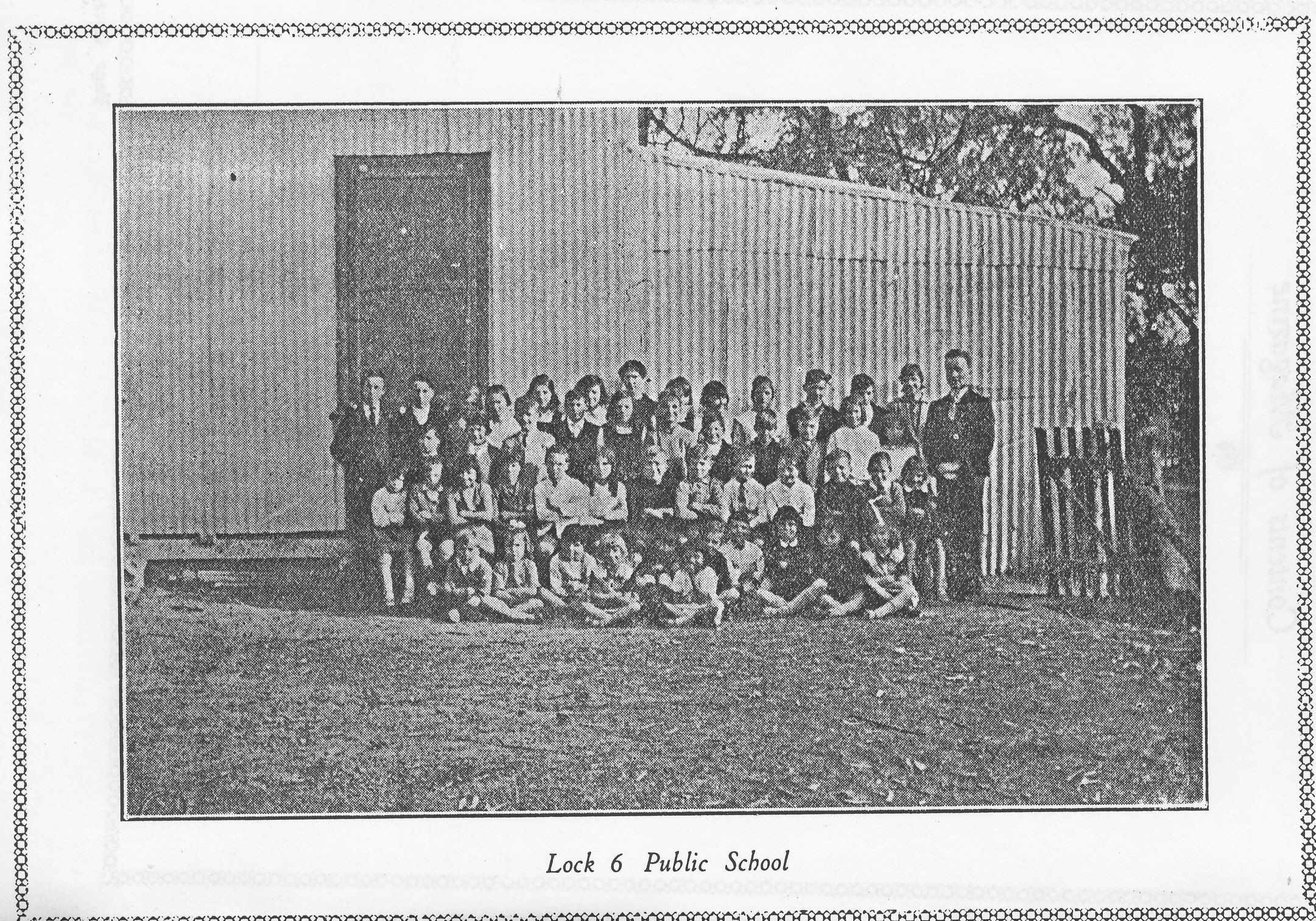
Come to the Fair: Lock 6 School, 1929
On September 6, 1929 1100 children from many regional schools converged in Renmark for River Region Education Week. Each school was allocated colours and Lock 6 children looked resplendent in their pink and silver grey as they participated in a day of sporting activity followed by an evening concert. Some of the scholars who acquitted themselves very well from Lock 6 included Gladys Fitzpatrick, Dorothy McKinnon, Stan Underwood, Gwen Westley and Roy McCully,
At the Renmark area concert that evening the children of the Lock Six School sang ‘Come to the Fair’ which was reportedly the most outstanding item of the evening with their preparation noted as exemplary. They received vigorous applause and shouts of “encore, encore!” filled the hall.
This is the marvellous song they sang, rendered here by the The National Children’s Choir Ireland in a 2003 Concert.
Can you help with a song?
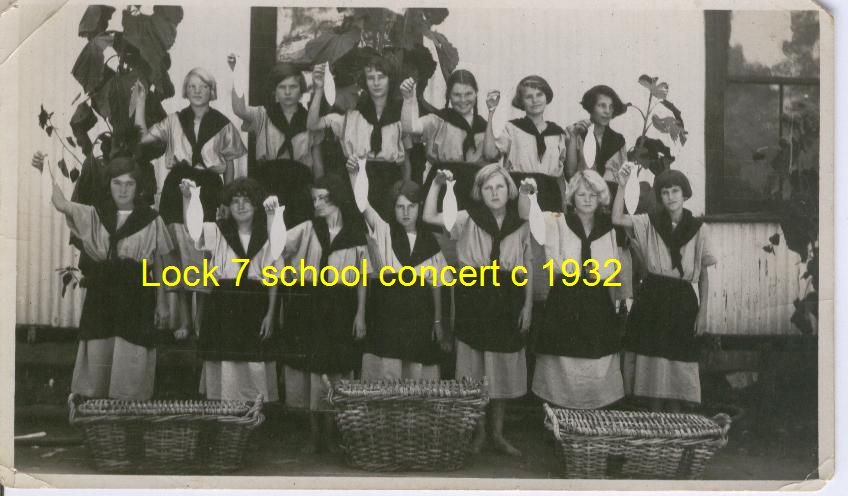
OK I need your help. Put on your thinking hats! I have this photo from Lock 7 school taken about 1932. The girls are dressed as fisher-women and holding cut-out cardboard fish. (herrings) Somebody who was there could remember words to this effect: “where are you going to my pretty lass, we’re going to sea, sea. After the …. Into the sea of jewels.” I would like to find out the name of the song so I can look it up and possibly find the words and tune. (Maybe you can even identify some of the girls: the girl second from right at back is my mother Evelyn Rains.)
Book proposed: article from Mildura Weekly, September 12, 2014, pp 18-19
Last week, the Mildura Weekly printed an article about my research and proposed book. Click on the two links below to read the article.


You must be logged in to post a comment.