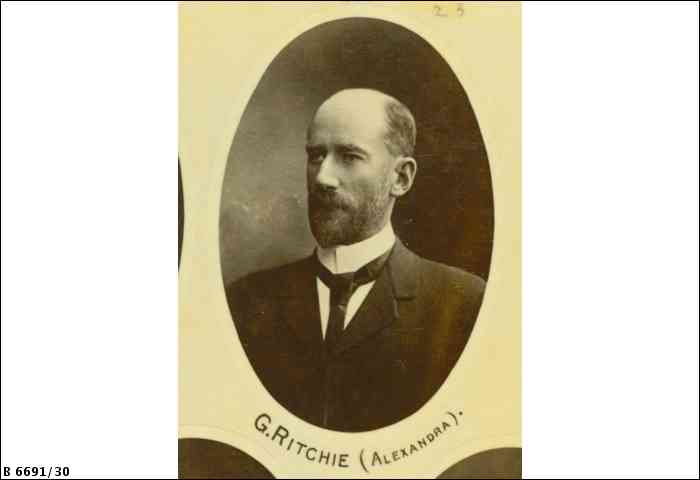
Sir George Ritchie and the start of Lock 3 before Lock 2.

Sir George Ritchie. Photo State Library of South Australia

Sir George Ritchie.
Photo State Library of South Australia

In the development of the Murray, the family name of Sir George Ritchie ranks with those of Hume, Cadell and Randall. George Ritchie, son of a River Murray trader and himself a river boat captain for half a lifetime, was born at Goolwa in 1864 and was educated at the Echuca Grammar School. After four years’ apprenticeship with a draper, he joined his father on the river. In 1884, two years after his father’s death, he entered into partnership with his two brothers as a steamboat owner on the Murray. Their first ship was the Pioneer.  In the course of his 40 years of active trading on the river, he owned about a dozen boats. But he turned to politics from about 1902 and in a long political career, he filled every Ministerial post as a Minister in both Houses of Parliament. He was Attorney-General in the Assembly and later Minister of Justice and Education in the Legislative Council. He was a strong supporter of the man on the land, an advocate of decentralisation, and a champion of River Murray development.

By 1919, he was an influential politician, and with Lock 1 construction underway at Blanchetown, discussions were taking place regarding the order the works would take place. Capt. George Ritchie, Member of the South Australian Parliament, recommended that instead of starting on lock and weir No. 2 after the completion of Lock No. 1, the Commissioners should allow work to start on Lock No. 3. This would give a back-up of water for 65 to 70 miles in the stream, giving a great stretch of higher water for both irrigation and navigation. Being considered an authority on the river, his suggestions were adopted. (1919 09 20 Cultivator)

Fruitful outcome!

Part 3

After lunch, we set off by car and found the Beribee Homestead which would appear to be the headquarters for the National Park.  It was all locked up but Lloyd tried to find somebody to see if we could in fact obtain access to the Lock 7 camp, but in vain.  We saw the old wool shed on the property which most likely was a hive of activity during the lock construction period; it made me think that the people on this station at that time would have actually been neighbours of the lock camp although not really  close.

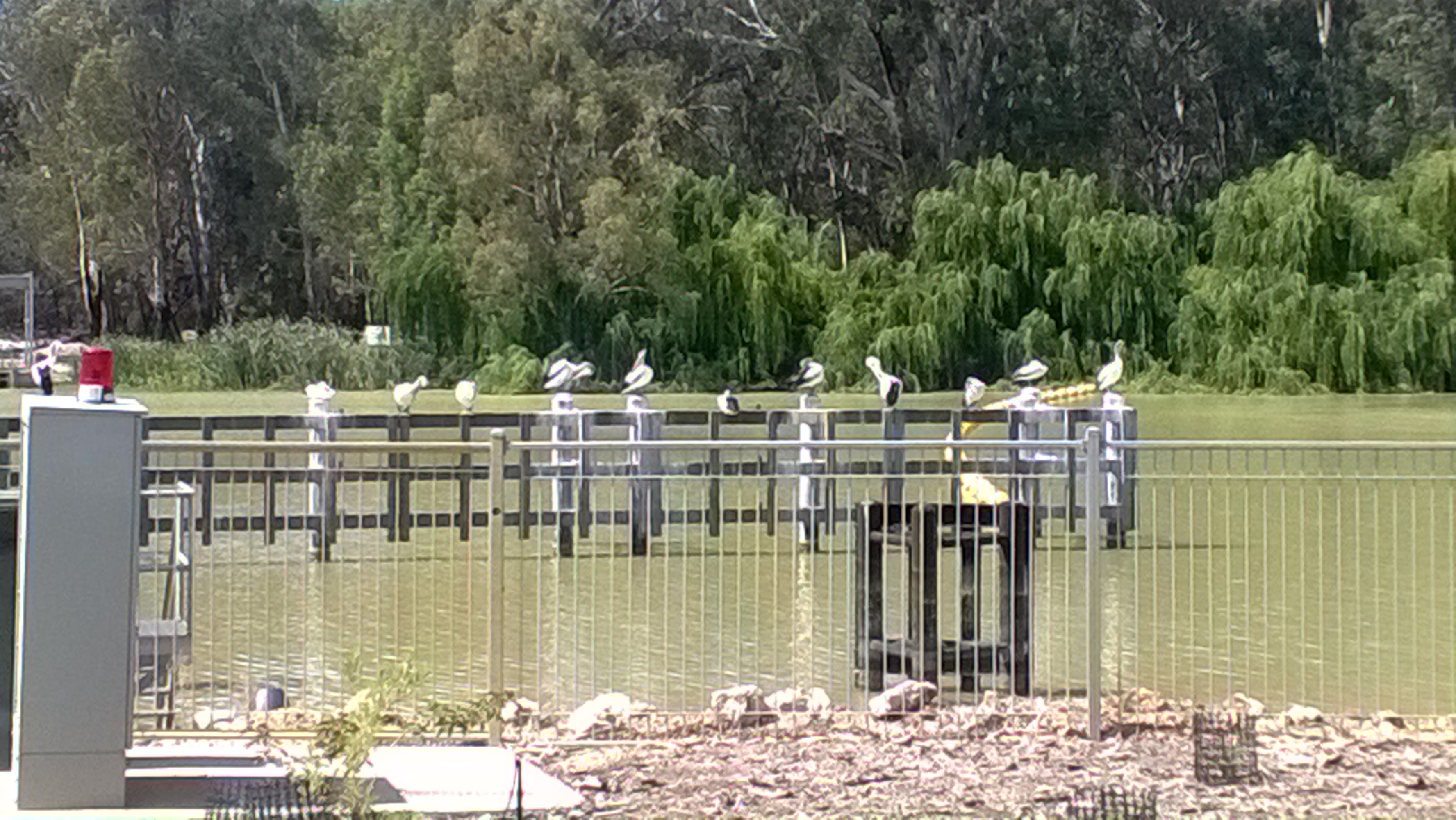
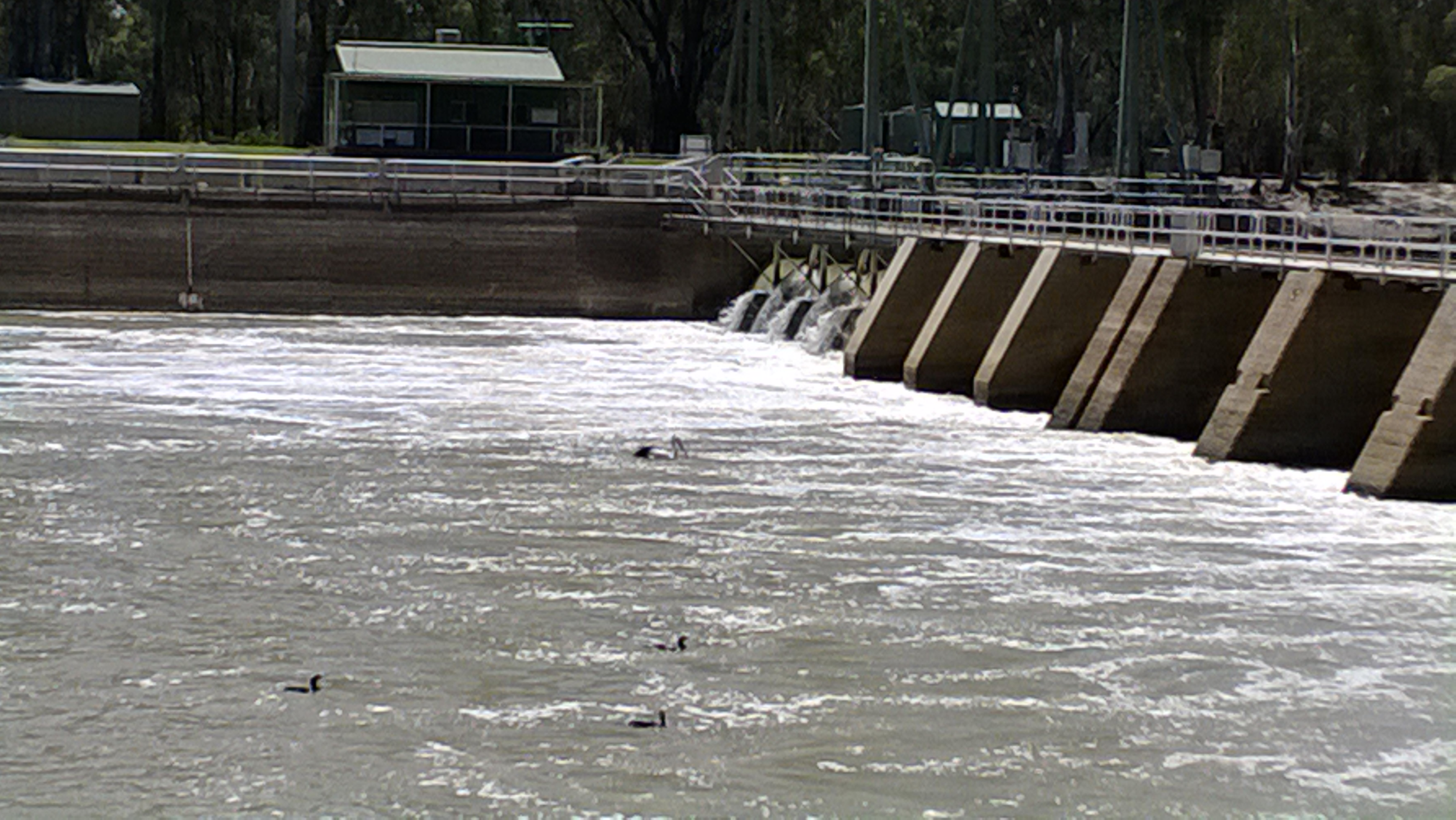
From there we headed back along the Old Coach Road towards lock 8 and detoured inland towards the River through some very picturesque country literally teeming with kangaroos and emus.  We had very close encounters with both a young emu and kangaroo.  The redgum forests near lock 8 are very attractive.  I got out and took some photos on the Victorian side of the river at lock 8 and enjoyed watching the pelicans which were looking for fish on the downside of the Weir.  Lots of waterbirds were in fact looking for a feed in the swirling waters. I got out my sound recorder here and  I recorded the sounds  to try to imagine what my lock communities would have heard: swirling water, kookaburras, magpies and other birds, as well as crickets, cicadas etc.Lock 8 pelicans

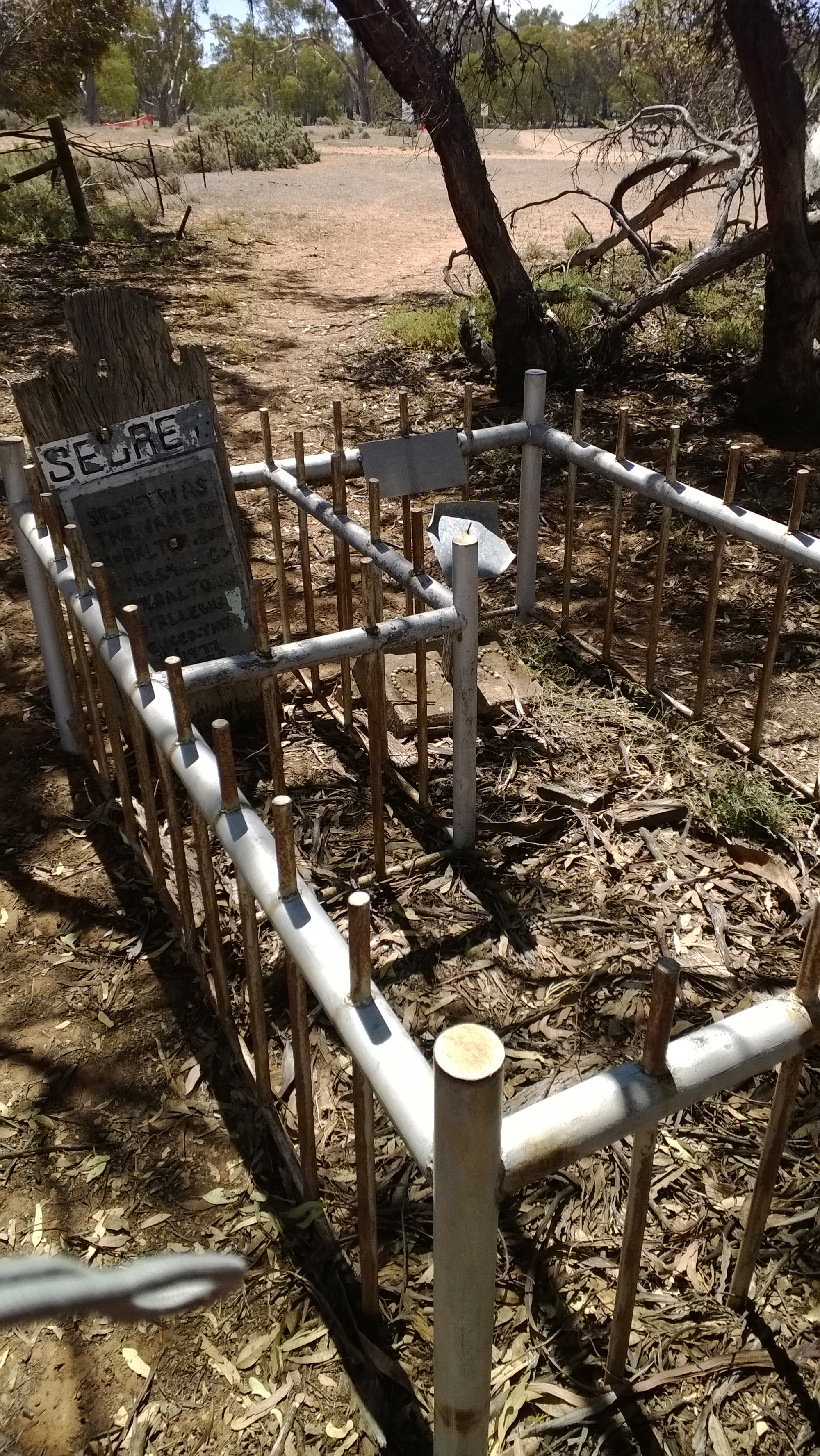
We then travelled back on the Coach Road through the gate into the Kulnine property where the first thing I noticed was a grave under a thicket of Mallee trees.  The grave was surrounded by a wrought iron fence and had an ‘appeal’ that drew us to investigate.  Mrs. Ralton and her two children drowned nearby in the river in 1910 and here lie at rest.

Mrs Ralton's Grave, Kulnine

Mrs Ralton’s Grave, Kulnine

 We were surprised to find that there was a geocache hidden in the tree nearby.  In fact there were a number of Geocaches all along the Old Coach Road that we had not known about.For a quick look at the hobby of geocaching, check this link:

http://www.geocaching.com/

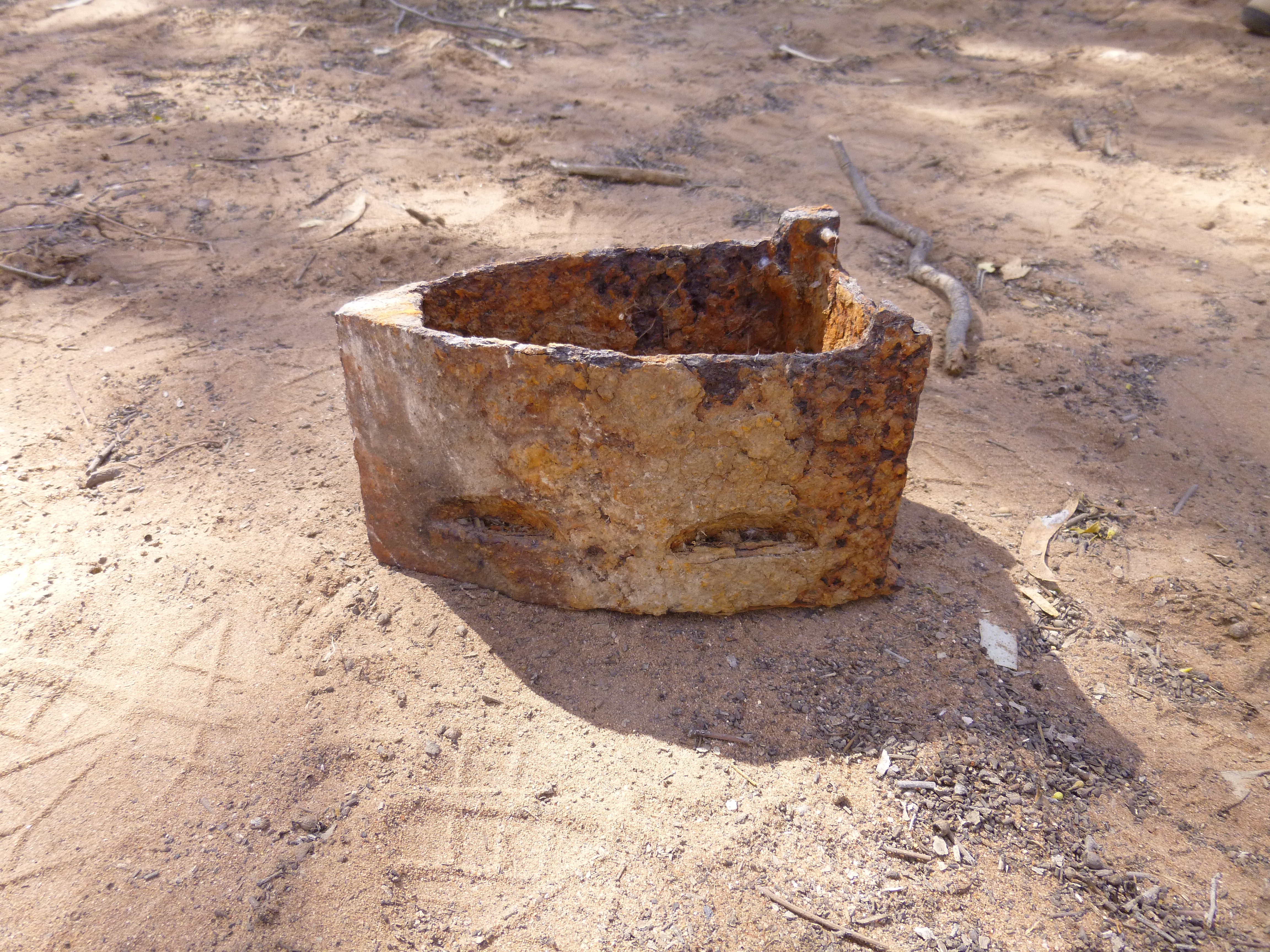
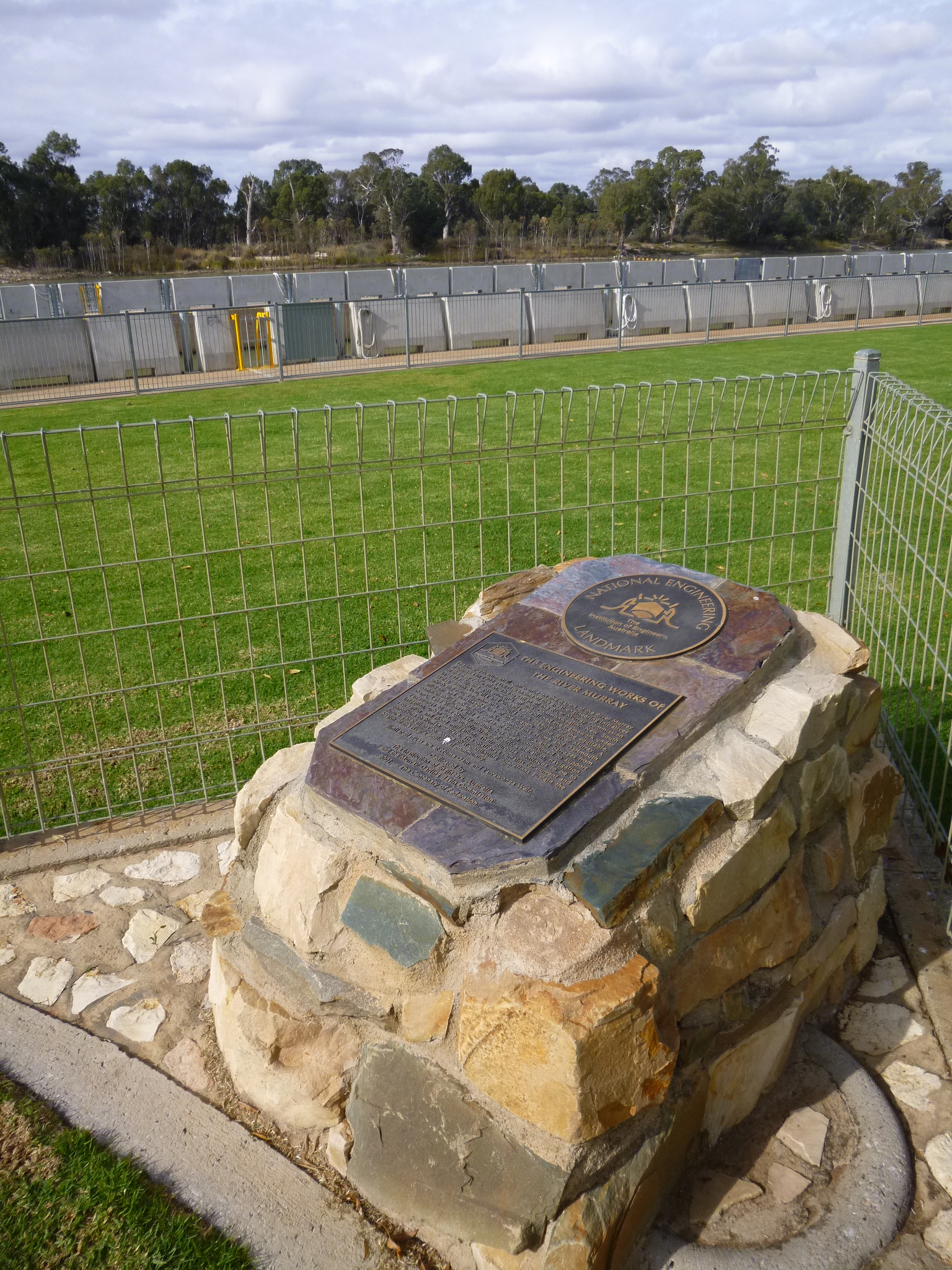
After a quick visit down to the river at this site we continued on our way to Lock 9.  The intention was to at least wander through the bush where the Lock 9 camp site had been.  However we stopped to take some photos of the lock and also of the plaque denoting the supposed site for the Lock 9 school (which I believe may be incorrect.  It seems more likely that the school would have been closer to the lock camp.) Just then one of the lock staff Steve approached us and I realized I had met him on a previous visit.  We engaged in a lengthy discussion about my research and he shared with me different finds that he has made at the sites.  It was he who had given me a Meccano piece and the button which he had found at Lock 7 on a previous visit, and he told me now that he had found an old iron at Lock 7.  He also had a very ornate and interesting spoon that he had found at the site.  He brought these out to show me and I took some great pictures!  Another lock man  came over and he too became  involved in the discussion of life on the locks.  These two men are still employed by SA Water under South Australian wage and work conditions as are the staff at Lake Victoria.

The old iron Steve unearthed at Lock 7.

The old iron Steve unearthed at Lock 7.

Then Steve took me into the house to show me a 1926 beer bottle that he had found at the Lock 9 site.  In those days they had to literally knock the top of the glass neck of the bottle to open it. He also showed me a cabin in his backyard which had formerly been used by lock men at various sites.  Although it was of more recent vintage than the cabins used during the construction period, I quickly poked my head inside and realized the hot and humid conditions that must have prevailed for those living in these cabins.

We set off for home after a very long day.  Although I had not accomplished what I had set out to do, I nonetheless, had an interesting and productive day.

Pelicans watching for a meal at Lock 9.

Pelicans watching for a meal at Lock 9.

Thwarted…

Image

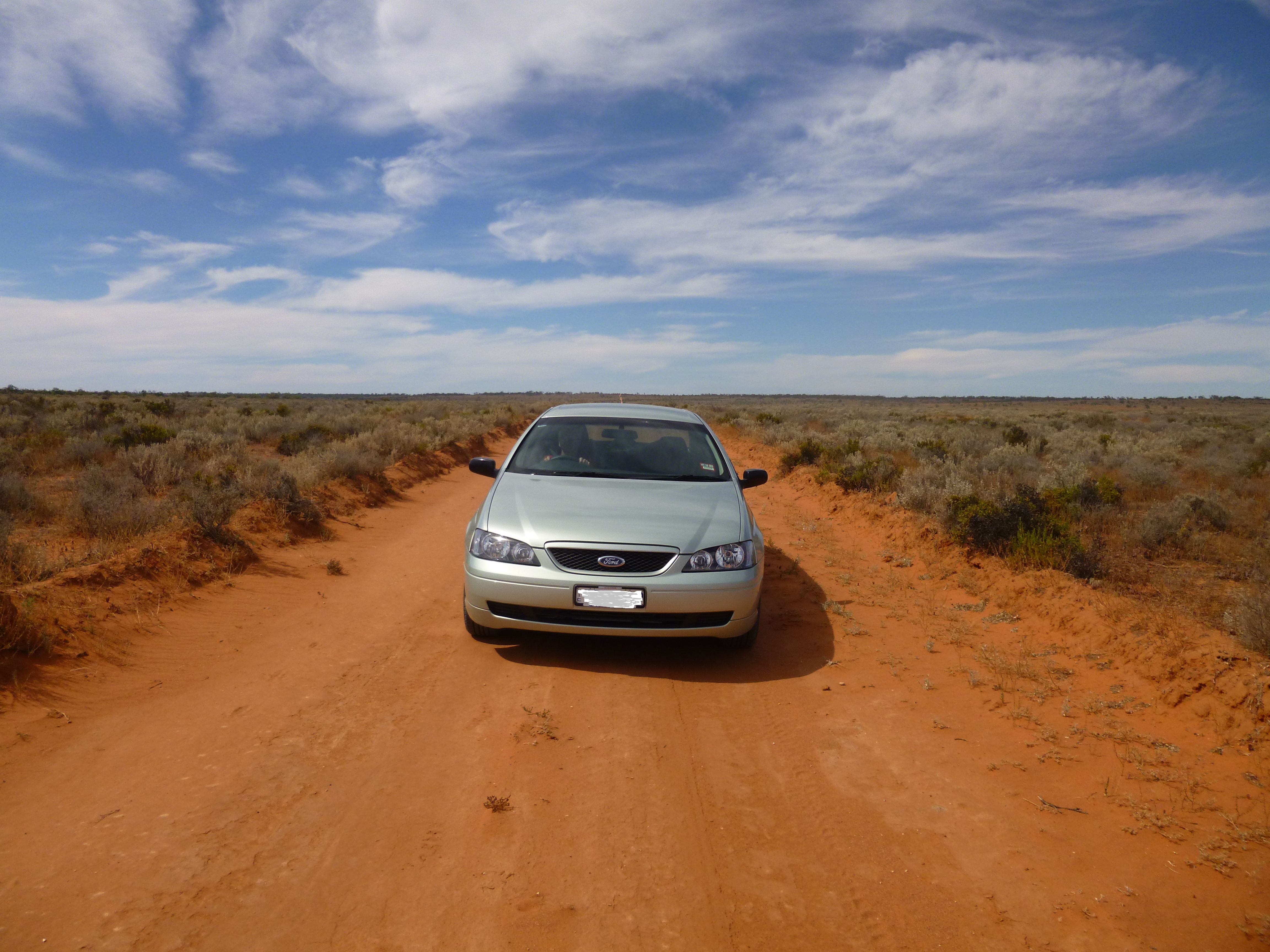
Continued from last week: Part two: After travelling along the Sturt Highway about 80 km, I kept an an eye out for the turnoff which was basically only a track known as Wallawalla Track. However, for the 2nd time, we missed the turnoff, inconspicuous as it is. I knew when we saw the telephone tower that we had gone too far so after a U-turn, and driving more slowly, we saw the dirt road leading off in the direction of the River. It is not at all obvious that the river is ahead because the track goes for about ten km over a flat, treeless, saltbush plain.On turning, we had entered the Murray Sunset National Park.

We travelled along this track for a distance of 12.5 km, and turned left onto the Old Mail Coach Road, another unsealed road. This was once the main mail route between Blanchetown and Wentworth from the late 1860’s to the early 1900’s, continuing during the lock construction period. The Old Coach road had also been the stock route that was once used by the ‘Overlanders’ who brought the very first stock to Adelaide overland from New South Wales. We travelled on this road for 2.7 km before turning right towards Lindsay Island.

"No go zone"

“No go zone”

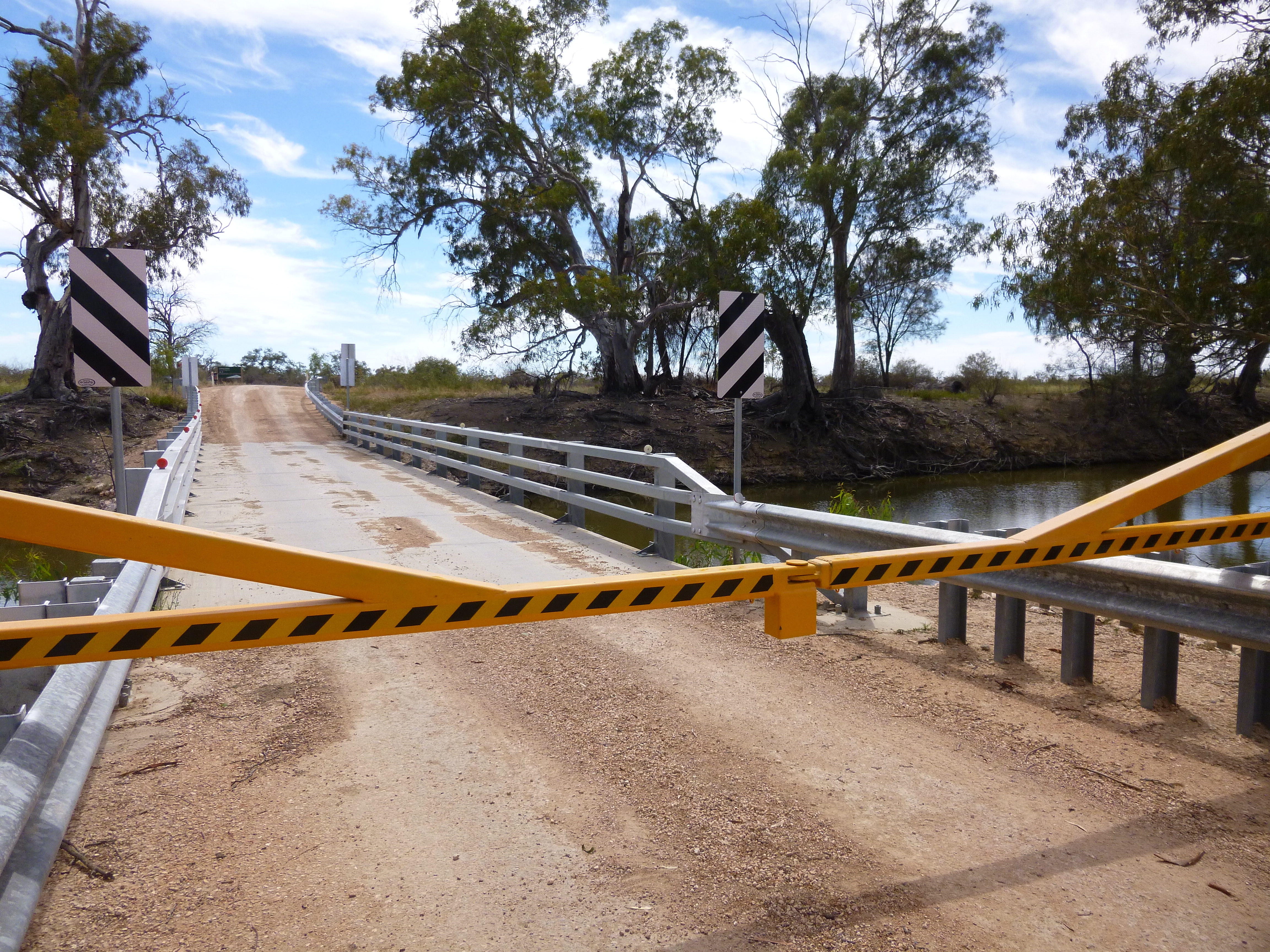
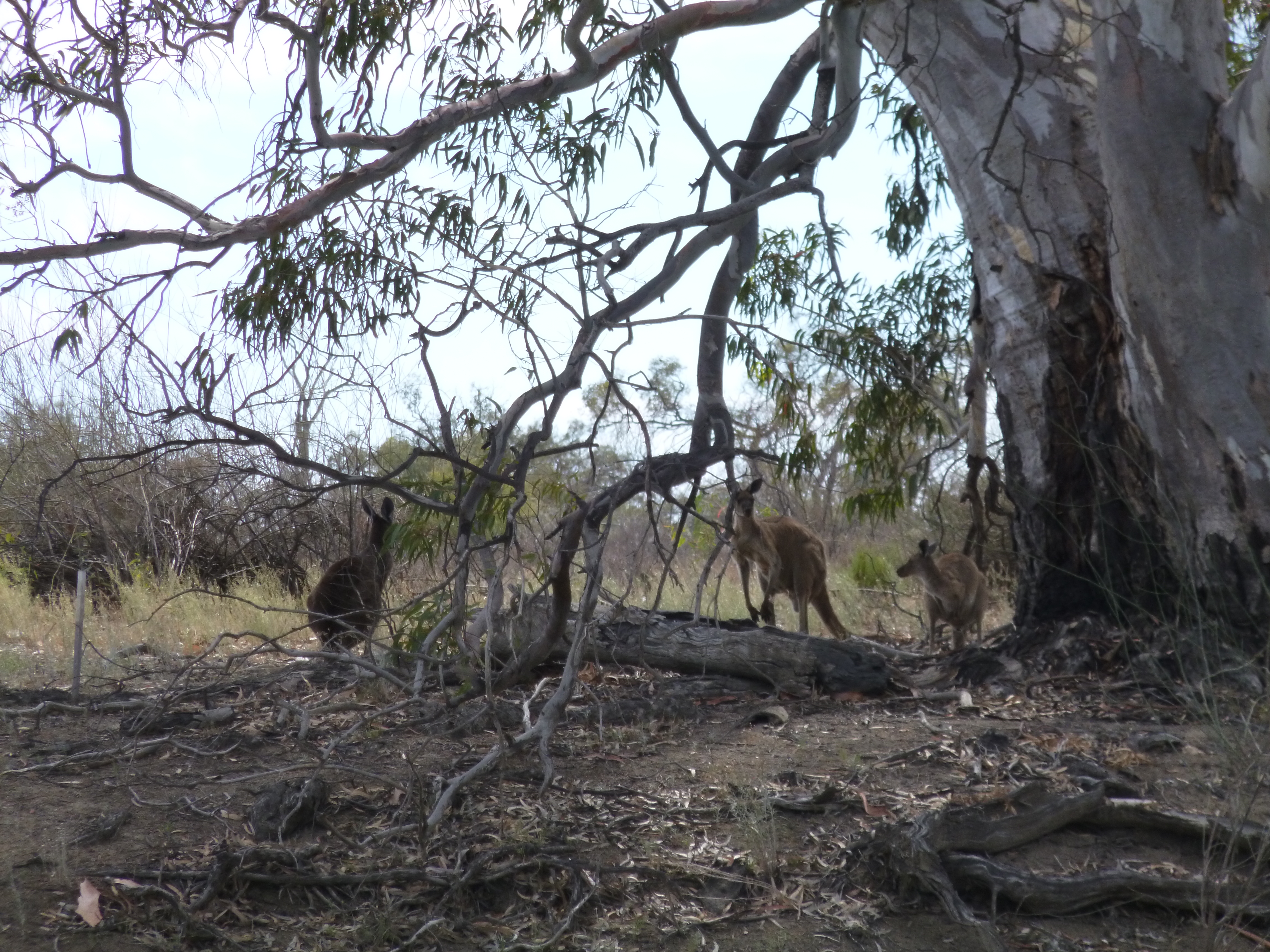
Imagine our dismay when we came to the bridge (pictured) and were confronted with closure. Apparently, (according to a small sign nearby), the National Parks Authority were undertaking maintenance on Lindsay Island and public access was therefore denied. We spotted a small group of kangaroos peacefully observing us from the shade of a huge river redgum across the river.

Kangaroos grazing contentedly on the banks of the LIndsay.

Kangaroos grazing contentedly on the banks of the Lindsay.

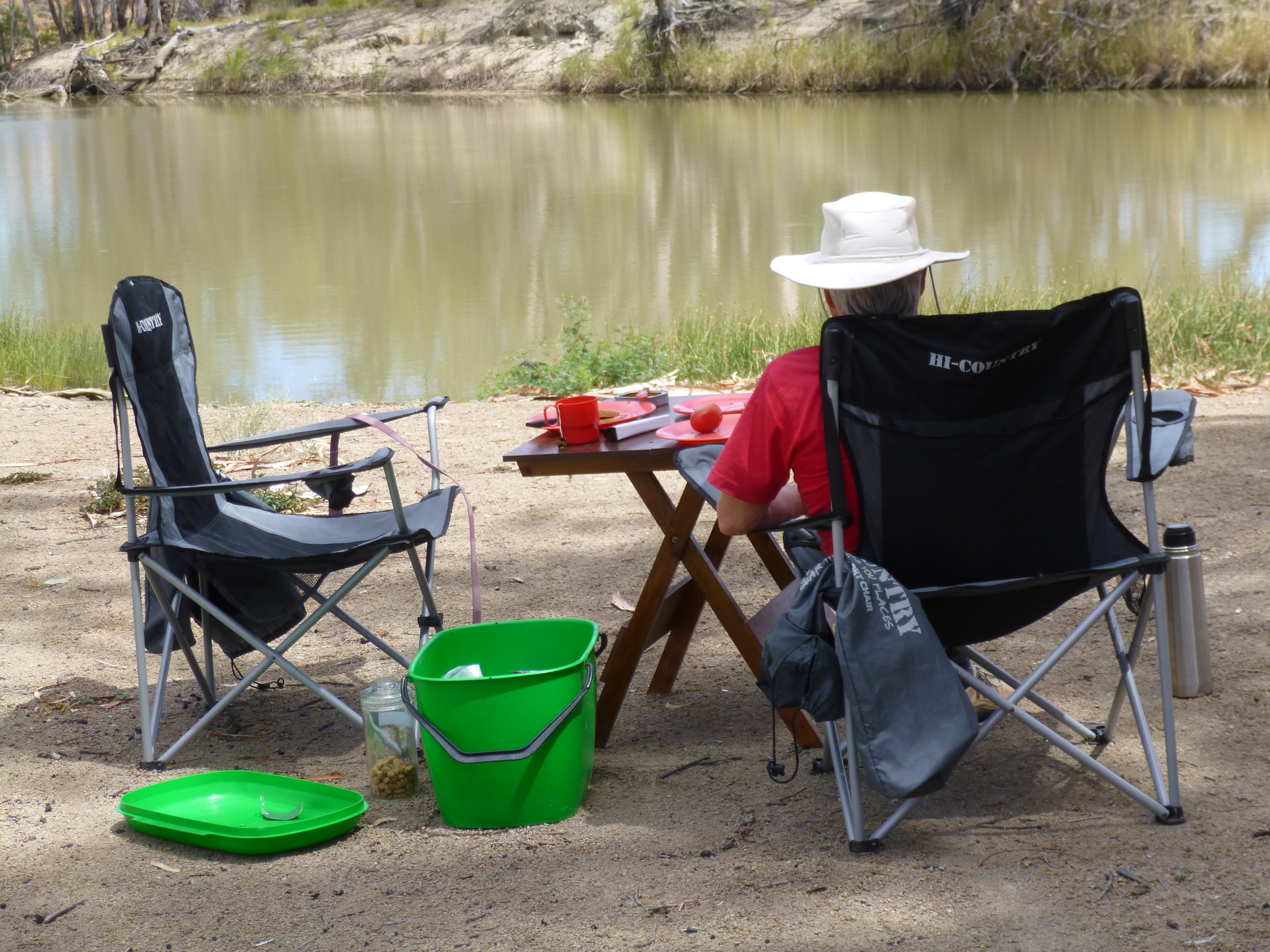
Disappointed but not prepared to be totally thwarted, we headed back along the Coach Road until we found a little inlet to the Lindsay River where we stopped to have a picnic lunch. Here at least I could listen to some of the bush sounds and put myself into the period of time when the lock families would have picnics on the banks of the Lindsay or the banks of the Murray. We pulled up at a beautiful spot which turned out to be a boat ramp but very close to some massive redgums which no doubt were only ‘whippersnappers’ during the lock construction period. I could imagine the Eddy family or the Rains family or the Adams family or a collection of these families, travelling, perhaps by boat, out to the spot and having a relaxing picnic just as we were. The shade was cool and the setting was picturesque. Sulphur-crested cockatoos swooped in and out of the nearby redgums, parrots squawked in the other  redgums, a solitary duck floated by on the river and in the distance a couple of pelicans were doing a spot of fishing. A location like this, removed a little from the lock camp and the busy sounds of construction, could have made a very pleasurable outing for the lock families and no doubt allowed them to return with perhaps a catch of fish or ducks for family meals.

A relaxing picnic by the Lindsay.

A relaxing picnic by the Lindsay.

After lunch we set off for a short stroll along the banks of the Lindsay River towards brilliantly coloured red sand ‘cliff’. I imagined the ‘lockites’, (as the lock construction communities liked to call themselves, strolling like this for some exercise or else scouting out where there was a hive to collect honey etc.

To be continued…

Inspiration: a trip….

After I had expressed my dilemma about knowing just where to make a start with writing my planned book last week, a good friend sent me these words of encouragement:

Then go back to the Lock ‘camp’ site and sit there with your voice recorder and talk about what you see and feel … what you imagine you can see and feel … the comings and goings, the soundscape, the trees, the birds, the water, go visit your interviewees in their (childhood) houses, and hang clothes on the line that is still there, put a yabby net in the water. Pretend you are your mother!!!! Take the poetry with you … write some while you are there….. Bet you will find a starting place then.”

Taking her up on her advice I decided to find a day where the weather forecast was suitably cool enough, (a week of 35 degrees + was expected very soon), packed a picnic lunch, and set off with my husband, Lloyd  about 10 a.m. on Wednesday 08/01/2014. Our destination was the Lock 7 site on the Murray. This site is clearest in the memories of the people with whom I have conducted interviews regarding life growing up in the lock and weir construction camps as being the last one at which their fathers worked, they were old enough to have well defined memories.

The lock 7 ‘site’ is about 110 kilometers West of Mildura, so I decided to get myself into the zone by listening to one of the interviews I had conducted. I chose to listen to “Charlie” who is now 94, and I took down some pointers which would assist me with the “creative imagination” exercise I had planned for when we arrived at our bush destination. Charlie spoke of the Billy-cart which he would take out into the scrub for a distance of a ‘quarter to half a mile’ to gather wood for the stove at home.  When I questioned him about the risk of getting lost, he suggested that it was not a problem as “there were lots of creeks.” I guess all the creeks would lead to the river!

I was certainly getting excited about my creative imagination exercise! (To be continued)

After we left the bitumen

After we left the bitumen.

My book

Quote

2014 has arrived and I have to put pen to paper, or finger to keyboard, and begin the writing towards which the past five years of research has been leading.

My book is on the construction of the locks and weirs by the South Australian Engineering and Water Supply Department between 1915 and 1935.  My focus is the lives of the men who built the locks and weirs along the Murray River and their wives and children as they forged not only huge permanent structures in the course of the river, but vibrant, if temporary communities.

For many, the connections made during those tough times, remained strong throughout their lives.


Oral History: ‘Lock’ housing

Oral history has the power to capture memories before they are gone forever. I have interviewed about ten people who grew up in the small communities which developed at each lock site during the construction phase on the River Murray. I have gained insights from these people which augment the archival records which I have also explored.

We always had a government house … the government provided some housing. They had board floors in them. They were very, very rough, just wood and iron, but at least they didn’t leak, or not much anyhow … they were very primitive in many ways. There was no screen doors for the flies and mosquitoeRains children near lock houses. Max P.

This image shows lock houses in the background of some ‘lockites,’ as children born at the lock communities were called.

Foundation Stone at Lock 1.

The Advertiser (Adelaide, SA) :

Monday 7 June 1915

Foundation Stone, Lock 1

Foundation Stone, Lock 1

A GIGANTIC STEP FORWARD: MURRAY LOCKING SCHEME BEGUN

AN HISTORIC CEREMONY AT BLANCHETOWN

THE WILLIAM R. RANDELL LOCK

SIR HENRY GALWAY LAYS THE FOUNDATION STONE

“History was made at Blanchetown on Saturday by the ceremonial inauguration of work in connection with the first attempt made to harness and control the waters of the River Murray. Too long, as Australians are at last recognizing, have neglect and procrastination taken the place of practical steps to grapple with this tremendous national problem, fraught with such possibilities for the growth of industry and prosperity, and South Australia is demonstrating to the rest of the Commonwealth the determination of her people to start work without further delay. A river fresh and full is the objective of the locking system now begun. Each of the series of important engineering works projected will help to conserve for the uses of irrigation and navigation the waters which without them pour wastefully into the Southern Ocean.